Speech Delay in 2-Year-Olds
Concerned your 2-year-old isn't talking?
Many parents search for help when a 2-year-old is not talking, uses very few words, or is not combining words yet. This page focuses on speech delay concerns at age 2 — not a full milestone checklist. For typical development by age, see our child speech development guide. For the broader overview, visit speech delay in children.
Ready to talk with a clinician? Book an assessment or explore Speech & Language Therapy.
What Speech Delay Can Look Like at Age 2
At age 2, speech delay often shows up as limited spoken vocabulary, little word combining, or heavy reliance on pointing and pulling adults toward what the child wants. Some toddlers babble but do not use clear words. Others say a few favorite words but do not grow their vocabulary over weeks and months.
Parents may also notice frustration, tantrums around communication, or a child who seems to understand more than they can say. These patterns do not automatically mean a lasting disorder — but they are valid reasons to seek professional guidance rather than waiting indefinitely.
What Many 2-Year-Olds Can Typically Do
As a short reference (not a full checklist): many 2-year-olds are building a growing word bank and beginning to put two words together. They often use words for people, foods, and familiar actions, and they use gestures alongside speech. Development varies, so one snapshot never tells the whole story.
For birth-to-five milestones, toddler stages, and parent activities, use our child speech development page. This age-2 guide stays focused on delay concerns and when monitoring may not be enough.
Red Flags at 24 Months
Discuss assessment sooner if several of these apply around age 2:
- • Few or no meaningful words
- • No two-word combinations
- • Limited or absent gestures (pointing, waving)
- • Inconsistent response to name or familiar sounds
- • Hearing concerns, frequent ear infections, or unexplained quietness
- • Loss of words the child previously used
Hearing differences — even fluctuating ones — can slow speech learning. A pediatrician or audiologist may be part of the pathway alongside speech and language assessment.


Late Talking vs Speech Delay — When Monitoring Isn't Enough
“Late talker” describes toddlers who start using words later than peers. Some catch up; others need structured support. Monitoring alone is less appropriate when vocabulary stays flat, word combining does not emerge, social engagement is limited, or frustration is affecting daily life.
An assessment does not lock a child into long-term therapy. It clarifies whether home strategies, short-term coaching, or a therapy plan is the better next step. For a wider overview of signs and causes, see speech delay in children in Dubai.
Understanding vs Talking at Age 2
Many toddlers understand more than they can say. A modest gap can be typical. A large gap — strong comprehension with very little speech — deserves a closer look at expressive language and how the child communicates wants and needs.
If this pattern fits your child, read when a child understands but doesn't speak. Distinguishing speech (sound production) from language (understanding and using meaning) is part of every thorough toddler assessment.
What a Speech Assessment Looks at for Toddlers
For 2-year-olds, assessment is usually play-based. Clinicians typically review developmental history, observe how your child communicates, and look at understanding, vocabulary, word combining, gestures, social engagement, and early speech sounds. Hearing screening is often recommended.
Findings guide whether to monitor, coach caregivers, begin therapy, or involve other specialists. Learn more about the assessment pathway on our speech delay pillar page.
How Therapy Supports 2-Year-Olds
Pediatric speech therapy for toddlers is typically play-based and family-centered. Goals often include first words, combining words, expanding understanding, and reducing communication frustration. Parent coaching is central so strategies continue during meals, play, and daily routines.
Explore approaches on our Speech & Language Therapy service page. Therapy plans are individualized; no clinic can honestly guarantee a specific outcome.
Related Concerns at Age 2
- •Hearing: Always worth checking when speech is delayed.
- •Motor speech: If your child seems to know what to say but struggles to get words out clearly or consistently, ask about childhood apraxia of speech.
- •Social engagement: Limited back-and-forth play or response to interaction may relate to social communication difficulties— not every quiet toddler is autistic, but broader patterns deserve careful evaluation.
Related ages: speech delay in 3-year-olds · speech delay in 4-year-olds
Speech Delay Support at The Speech Clinic
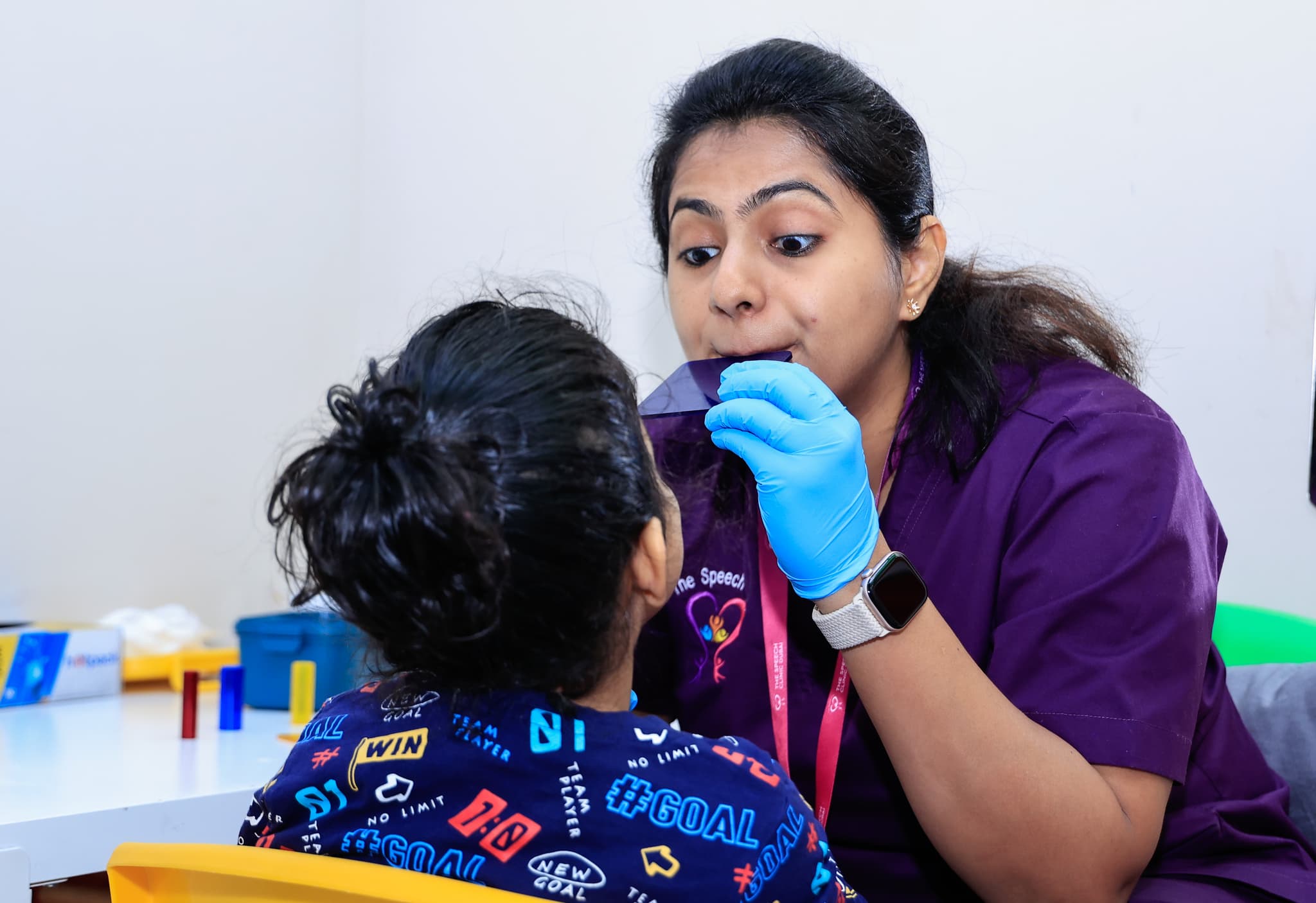
The Speech Clinic in Dubai Healthcare City offers pediatric speech and language assessment and therapy for toddlers and young children. Families receive clear findings, practical next steps, and coordinated support when other services are needed.
Contact us to book an assessment, or learn more about Speech & Language Therapy.
Frequently Asked Questions About Speech Delay at Age 2
Speech delay at age 2 usually means a toddler is not using as many words as expected, is not combining two words, or relies heavily on gestures instead of spoken communication. A speech-language pathologist looks at both how many words your child says and how they understand and use language in everyday routines.
Most 2-year-olds are not speaking in long sentences yet. A more useful checkpoint is whether they are combining two words (for example “more milk” or “mama go”) and growing their spoken vocabulary. If your child is not combining words or has very few meaningful words, an assessment can help clarify next steps.
A gap between understanding and talking is common in toddlers, but a large or persistent gap can still be a reason for concern. Learn more on our page about when a child understands but doesn't speak. An evaluation can show whether monitoring or early support is more appropriate.
Consider assessment if your 2-year-old has few words, is not combining two words, rarely uses gestures, does not respond consistently to their name, or seems frustrated when trying to communicate. You do not need to wait for a diagnosis before seeking advice from a pediatric speech therapist.
Some late talkers catch up with rich language exposure and time. Others need structured support. Because it is hard to know which path a child will follow without evaluation, waiting indefinitely can delay helpful early intervention. Assessment helps families decide whether to monitor or begin therapy.
Therapy for toddlers is typically play-based and includes parent coaching. Goals may include building first words, combining words, strengthening understanding, and reducing communication frustration. Progress varies by child; therapy aims to support development, not guarantee a specific outcome.
Book an Assessment for Your 2-Year-Old
If your 2-year-old is not talking or not combining words, an assessment can provide clarity and a practical plan. Our team in Dubai Healthcare City is ready to listen and guide you.
Prefer to call? +971 50 885 7146