Child Speech Development in Dubai
What is child speech development?
The first three years of life are the most intensive period for acquiring speech and language skills. These skills develop best in an environment rich with sounds, sights, and consistent exposure to the speech and language of others. Children follow a natural progression for mastering communication, though the pace varies from child to child.
Voice is the sound produced when air from the lungs passes through the vocal folds. Speech is talking — the coordinated muscle actions of the tongue, lips, jaw, and vocal tract that produce recognizable sounds. Language is a shared set of rules that allow people to express ideas through words, gestures, signing, or writing.
Speech and Language Milestones by Age
The milestones below help parents and health professionals determine if a child is on track. They are based on clinical consensus from sources including the U.S. National Institutes of Health (NIDCD).
| Age | Understanding | Talking & Communicating |
|---|---|---|
| Birth – 6 months | Reacts to loud sounds; recognizes caregiver's voice; calms when spoken to | Coos; makes pleasure sounds; cries differently for different needs; smiles at familiar faces |
| 7 – 12 months | Follows sounds with eyes; responds to tone of voice; listens when spoken to; understands common words like “cup” | Babbles speech-like sounds (p, b, m); uses gestures (waving, pointing); imitates sounds; has 1–2 words by first birthday |
| 12 – 24 months | Follows simple commands; points to pictures when named; understands far more words than they can say | Uses 10–20+ words; combines two words (“more cookie”); copies words and sounds; enjoys nursery rhymes |
| 2 – 3 years | Follows two-step instructions; understands simple questions | Uses two- to three-word phrases; uses k, g, f, t, d, n sounds; speech understood by family and friends |
| 3 – 4 years | Hears you from another room; answers Who, What, Where, Why questions | Uses sentences with 4+ words; talks about daily activities; speaks easily without repeating syllables |
| 4 – 5 years | Understands most of what is said at home and school; pays attention to short stories | Tells on-topic stories; communicates easily with children and adults; uses rhyming words; says most sounds correctly |
The Toddler Talk Explosion (12–24 Months)
The second year brings rapid change. Guidance from Great Ormond Street Hospital (GOSH) describes key stages parents often notice:
- •9–18 months: Children understand common words used in daily routines. They may produce sound strings, combine babble with gestures, and attempt first meaningful words.
- •12 months onwards: Understanding of single words and simple questions grows. Children anticipate routines, bring familiar objects when asked, and learn new words each week.
- •18 months onwards: Children follow instructions with two key words, say “no” and “mine” clearly, use 10–20 words, and start two-word combinations. By around age 2, many have 100–200 words in their core vocabulary.
At this stage, toddlers often understand around five times more words than they can say. Unclear pronunciation is common and usually normal — but persistent difficulty should be discussed with a professional.

What Parents Can Do at Home
Everyday interactions are the most powerful tool for speech and language growth. Try these evidence-informed activities:
Listen to sounds
Name sounds in the environment — doorbells, animals, vehicles. Use symbolic sounds like 'uh-oh' when something drops.
Take turns
Play rolling-ball games and simple give-and-take activities as your child learns to follow instructions.
Learn new words
Use daily experiences to introduce descriptive words — cold ice cream, up and down on the slide, flowers at the park.
Group words together
At playtime or mealtimes, name categories: 'car, ball, teddy — toys' or 'apple, rice — food.'
Read books
Point to pictures, ask 'where is the teddy?' and let your child fill in familiar words as stories become known.
Sing and rhyme
Nursery rhymes with actions — Wheels on the Bus, Head Shoulders Knees and Toes — build rhythm, memory, and vocabulary.
Speech Disorder vs. Language Disorder
Understanding the difference helps you describe concerns accurately when seeking support:
| Type | What it affects | Examples |
|---|---|---|
| Language disorder | Understanding others (receptive) or expressing thoughts (expressive) | Developmental language disorder (DLD); limited vocabulary; difficulty forming sentences |
| Speech disorder | Physical production of speech sounds | Articulation difficulties; stuttering; apraxia of speech (difficulty sequencing sounds into words) |
When to Consult a Speech-Language Pathologist
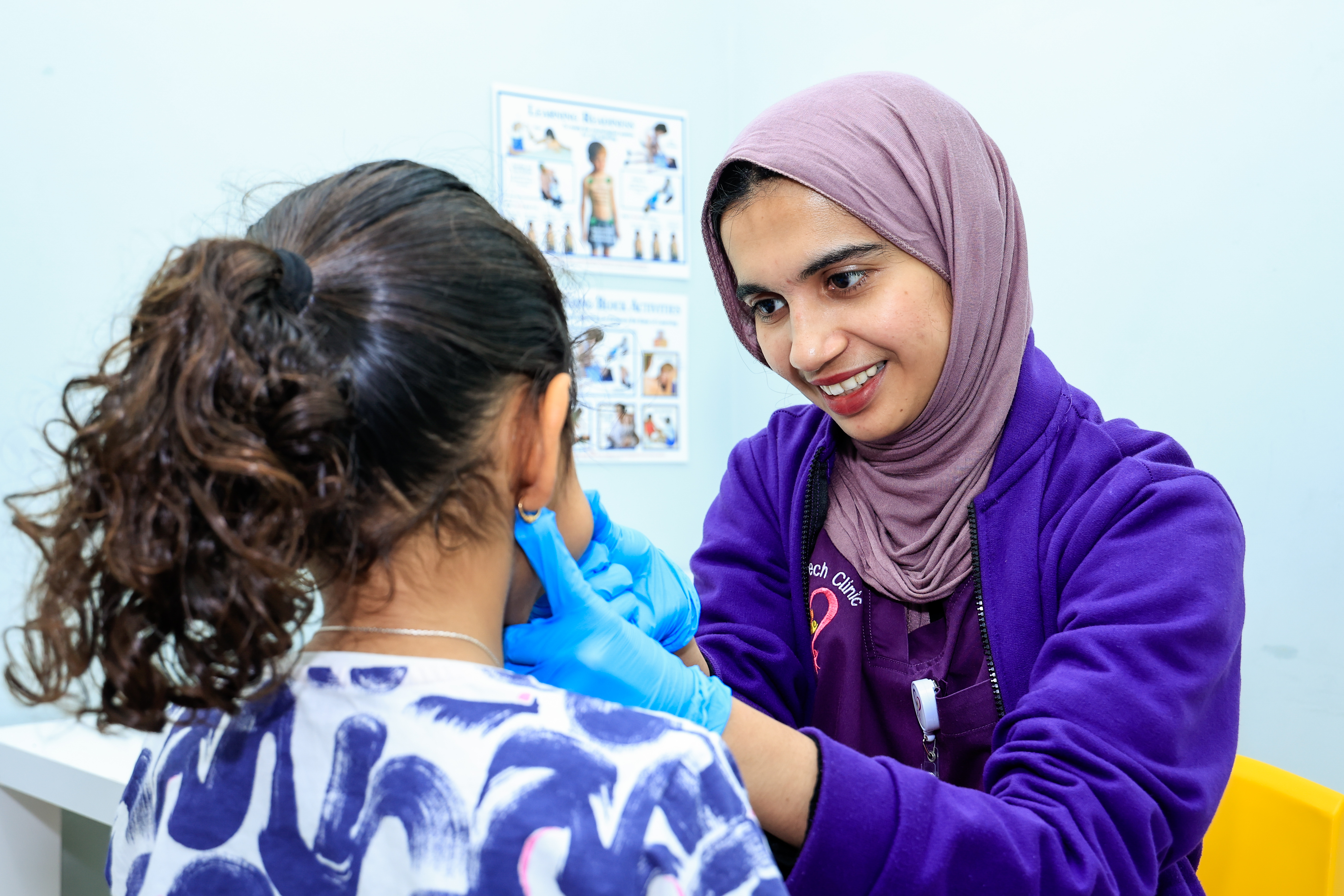
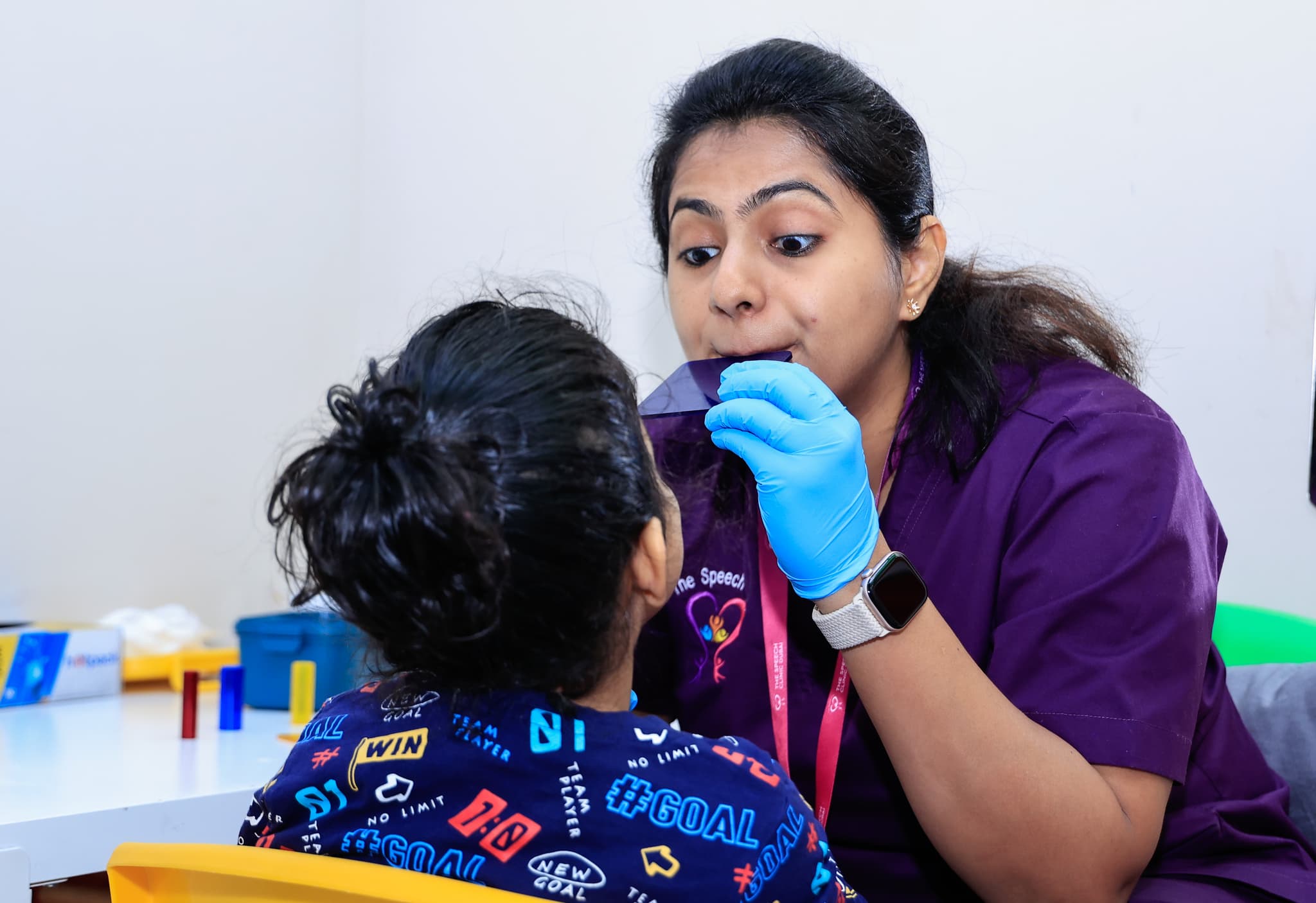
Talk to your child's doctor if you have concerns. They may refer you to a speech-language pathologist (SLP), who will review your child's communication and general development, use spoken assessments, and often recommend a hearing test. Depending on results, they may suggest home activities, individual or group therapy, or further evaluation.
Red flags to discuss with a professional
- • No response to name or sounds by 12 months
- • No gestures (pointing, waving) by 18 months
- • No two-word phrases by age 2
- • Speech largely unclear to family by age 3
- • Loss of previously acquired words or skills
- • Limited eye contact or social engagement with communication
If you are concerned about speech delay in children — rather than typical milestones alone — that guide covers signs, assessment, and when to seek help, including age-specific pages for 2-, 3-, and 4-year-olds.
At speech therapy in Dubai, our certified pediatric speech-language pathologists provide comprehensive assessments and evidence-based therapy for children under 13 in Dubai Healthcare City. Book a consultation to discuss your child's development.
Frequently Asked Questions About Child Speech Development
A speech disorder involves difficulty physically producing sounds correctly — for example stuttering or apraxia of speech. A language disorder means a child struggles to understand what others say (receptive language) or has trouble sharing their own thoughts and ideas (expressive language). Developmental language disorder (DLD) can delay mastery of language skills well into the school years.
By age 2, most children use two-word phrases such as “more milk” or “daddy bye-bye,” acquire new words regularly, and use many different consonant sounds at the beginning of words. They typically have a core vocabulary of roughly 100–200 words. Pronunciation is often unclear at this stage, which is usually normal.
Talk to your child's doctor if your toddler is not responding to their name or simple instructions by 12 months, lacks gestures like pointing or waving by 18 months, or is not combining two words by age 2. If speech is largely unclear to family members by age 3, a speech-language pathologist evaluation is recommended. A hearing test is often included because hearing loss can affect speech development.
Children learn speech and language by listening to the sounds around them. Even mild or temporary hearing loss can slow how quickly a child picks up words and sounds. If you notice your child not reacting to sounds, not turning when called, or falling behind on milestones, ask your doctor about a hearing evaluation alongside a speech assessment.
Talk to your child throughout daily routines, name objects and actions, read books together, sing nursery rhymes, play turn-taking games, and respond positively to all communication attempts — including gestures and approximations of words. Reduce background noise when possible and give your child time to respond before repeating a question.
Between ages 1 and 2, children commonly understand far more words than they can say — estimates suggest they may comprehend around five times as many words as they produce. This “understanding gap” is a normal part of early language development as expressive skills catch up to receptive understanding.
The Speech Clinic in Dubai Healthcare City offers pediatric speech and language therapy for children under 13. Our certified speech-language pathologists assess communication development and provide evidence-based intervention for speech delays, language disorders, and related concerns. Contact us to book an evaluation.