Feeding Therapy

At our The Speech Clinic, in Dubai, we understand that feeding difficulties can affect both the physical and emotional well-being of individuals. Our Feeding Therapy services are designed to help children and adults overcome challenges such as picky eating, swallowing issues, and sensory sensitivities to food. Feeding therapy is provided at The Speech Clinic in Dubai Healthcare City, Building 47, within speech and language therapy.

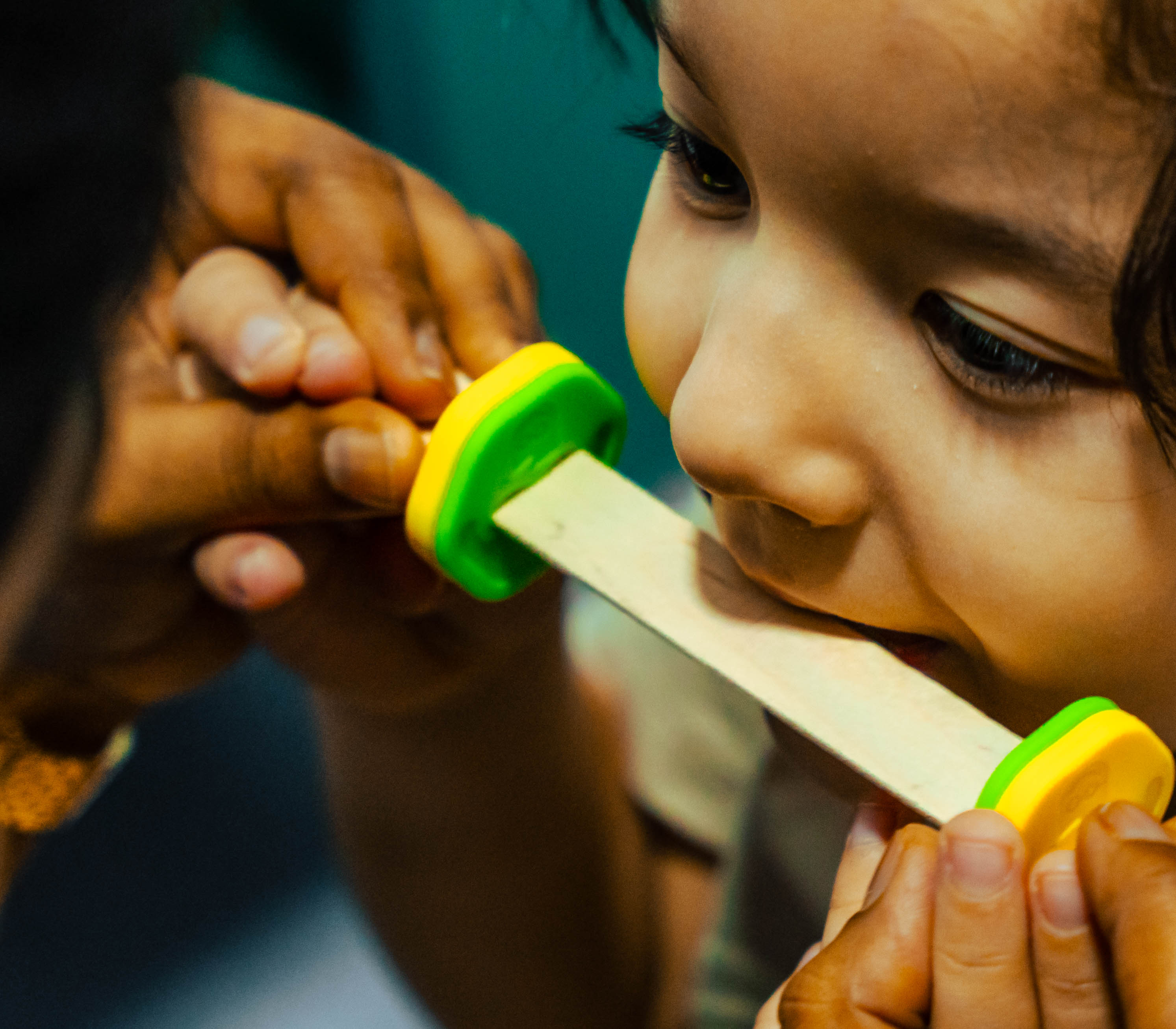

At The Speech Clinic, feeding therapy uses evidence-based approaches for these difficulties. Sessions stay playful, and each method is matched to the child.
We use a combination of proven, playful methods to help individuals overcome feeding challenges. Each approach is tailored to meet your specific needs, ensuring progress at your own pace.
1.SOS Approach to Feeding:
The Sequential Oral Sensory (SOS) Approach is all about making food less intimidating. It starts with play and exploration – no pressure, just fun! By gradually introducing new textures, tastes, and even colors of food, we help children feel more comfortable and confident around meals. The goal is to go from simple exploration to actually eating and enjoying a variety of foods.
What’s Included?
- Exploring foods without the pressure to eat them
- Creating positive associations with different textures and tastes
- Moving at your pace – no rush, just steady progress
2.TalkTools Feeding Therapy:
TalkTools is a unique, hands-on therapy that uses specific tools and exercises to strengthen and coordinate the muscles needed for chewing and swallowing. Whether your child struggles with oral-motor skills or sensory sensitivities, TalkTools focuses on improving mouth strength and coordination so that eating becomes easier, safer, and more enjoyable.
What’s Included?
- Fun oral-motor exercises to strengthen mouth muscles
- Tools that make chewing and swallowing easier and more comfortable
- Personalized therapy plans that evolve as you progress
Common Feeding Challenges We Address:
Picky Eating:
Does your child turn their nose up at most foods? Let's explore the world of flavors together!
Swallowing Issues:
Struggling with swallowing can be stressful. We'll work on building confidence and safety around eating.
Sensory Sensitivities:
If certain textures or smells turn you off from food, we'll help you feel comfortable with more variety.
Oral Motor Difficulties:
If chewing and swallowing are a challenge, we use hands-on techniques to build strength and coordination.
Transitioning from Liquids to Solids:
Moving from bottle-feeding to solid foods doesn't have to be overwhelming we'll make it smooth!
What to Expect in Feeding Therapy:
Every session is designed to be interactive, engaging, and full of fun activities! We know that feeding therapy doesn't have to be a chore, and we make sure every step is a positive experience.
Interactive Play:
From sensory food exploration to hands-on oral-motor exercises, every session is full of exciting, child-friendly activities.
Gradual Progress:
We break things down into small, manageable steps so that every milestone feels like a win.
Sensory Sensitivities:
Parents and caregivers are a big part of the process! We'll guide you with practical tips and strategies to support progress at home.
Ready to Get Started?
Feeding therapy at our clinic is all about taking one step at a time no pressure, just progress. We're here to make mealtimes enjoyable again, so that both you and your child feel confident around food. If you're ready to make mealtime fun again, let's talk! Contact us today to schedule a consultation, and take the first step toward building a positive, stress-free relationship with food.

Frequently Asked Questions
Showing 8 of 25 questions
?What is pediatric feeding therapy and how can it help my child?
Pediatric feeding therapy focuses on helping children who have challenges with eating, drinking, or swallowing. These may include picky eating, sensory-based food refusals, difficulties coordinating the mouth muscles used for chewing and swallowing, or challenges moving from liquids to solid foods.
At The Speech Clinic Dubai, we use evidence-based approaches such as the SOS Approach, Food Chaining techniques and TalkTools Feeding Protocol. Therapy is conducted in a supportive and playful environment to help your child build confidence, develop safe feeding skills, and enjoy mealtimes.
?What types of feeding challenges do you help with?
We support a wide range of feeding concerns, including:
- • Persistent picky eating or refusal of age-appropriate foods
- • Sensory sensitivities to textures, smells, temperatures, or food colours
- • Orofacial neuromuscular difficulties (e.g., weak chewing strength, poor tongue coordination)
- • Challenges transitioning from purees to textured solids
- • Difficulty chewing or swallowing
- • Gagging, coughing, or discomfort during meals
- • Anxiety or behavioural resistance around mealtimes
- • History of medical or developmental conditions impacting feeding
?Do you also help with cup drinking, straw drinking, and/or bottle weaning?
Absolutely. We support transitions such as:
- • Bottle to cup
- • Open cup training
- • Straw drinking skills
- • Reducing dependency on feeding bottles
We use structured oral-motor and sensory strategies to make the transitions smooth and safe.
?Do you help children who are not gaining weight properly?
Yes. If feeding difficulties affect nutrition or growth, we collaborate with pediatricians and dietitians. Our role is to improve chewing, swallowing, food acceptance, and overall intake safely.
?What happens during a feeding assessment?
A pediatric feeding assessment includes:
- • A detailed case history about your child's medical, developmental, and feeding background
- • Observation of your child's eating behaviours
- • Assessment of oral-motor coordination, chewing patterns, jaw stability, tongue movement, and swallowing safety
- • Sensory and behavioural responses to different food textures
- • Identification of underlying factors (motor, sensory, behavioural, or medical) affecting feeding
Following the assessment, we create a personalized feeding plan with clear, measurable goals.
?Do you involve parents during feeding therapy?
Yes. Parent involvement is essential. We guide you step-by-step so you can continue feeding strategies at home. This ensures faster progress and helps create positive, stress-free mealtime routines.
?What improvements can I expect with therapy?
With consistent participation, children may:
- • Expand their accepted food variety
- • Improve chewing efficiency and tongue coordination
- • Reduce gagging, coughing, or food refusal
- • Increase comfort with different textures and smells
- • Build independent eating skills
- • Reduce mealtime stress for both child and family
?Is feeding therapy the same as food therapy or picky eater therapy?
While picky eating is one reason, feeding therapy goes much deeper into the child's challenges. It addresses sensory processing, chewing and swallowing skills, mealtime behaviour, and oral-motor coordination. It is suitable for both picky eaters and children with medically-based feeding difficulties.
?Does my child need a medical referral for feeding therapy?
A referral is not mandatory, however, children with medical conditions such as reflux, tongue tie, allergies, or gastrointestinal issues may benefit from a multidisciplinary approach involving a pediatrician, dietitian, or ENT.
?What if my child refuses to participate in feeding therapy?
We use a child-led, play-based approach to build trust first. There is no force-feeding. Slowly, children begin to explore new foods at their own comfort level. Parents are coached on how to reduce pressure at home to improve acceptance.
?My child stuffs too much food in the mouth. Will he need feeding therapy?
Overstuffing can be due to reduced sensory awareness, poor chewing coordination, or difficulty judging bite sizes. Therapy helps children recognise safe bite amounts and improve sensory-motor control while eating.
?What if my child has a strong fear of trying new foods?
We use gradual exposure, sensory play, modelling, and positive reinforcement to help children feel safe around new foods. No child is forced to eat. We build comfort first, then acceptance.
?Do you offer home-based feeding therapy plans?
Yes. Each session includes a customised home plan with specific strategies, foods, and exercises. Parent training is a key part of successful progress.
?Which age groups do you work with for feeding therapy?
We provide feeding therapy for children from infancy through 16 years of age. Our programme is tailored to each developmental stage, ensuring that your child's sensory, motor, and behavioral feeding needs are fully supported as they grow.
?How do I book a feeding therapy session? Where are you located?
To schedule an assessment:
- • Phone: +971-50-885 7146
- • Email: info@thespeechclinic.ae
Location:
Dubai Healthcare City
Building 47, Units 301/302/303/304
Timings:
Monday to Saturday
9:00 am – 7:00 pm
?Can feeding therapy help with slow eating for children who take too long to finish meals?
Yes. Slow eating may be due to low oral-motor endurance, difficulty chewing, or reduced sensory awareness. Therapy builds stamina, improves chewing efficiency, and helps your child complete meals within a healthier timeframe.
?Can feeding therapy help a child with frequent coughing or choking while eating?
Yes. Coughing or choking may indicate poor swallowing coordination or weak oral-motor control. A therapist assesses safety, identifies risks, and designs a therapy plan to improve safe swallowing.
?How often does feeding therapy take place?
The frequency of therapy depends on your child's needs. Some children attend once a week, while others benefit from more frequent sessions. We discuss and recommend the most appropriate schedule after the initial assessment.
?What methods or techniques do you use in therapy?
Our interventions include:
- • Sensory-based feeding techniques
- • Oral-motor and neuromuscular strengthening exercises
- • Food exploration and desensitisation
- • Behavioural shaping strategies
- • Texture progression and chewing practice
- • Mealtime routine training
- • Tools from SOS Approach & TalkTools
All therapy is designed to be safe, enjoyable, and developmentally appropriate.
?Should I be concerned if my child shows these signs?
You should seek a feeding assessment if your child:
- • Eats very few foods for their age
- • Avoids specific textures, colours, or food groups
- • Has difficulty chewing or appears to swallow poorly
- • Frequently gags, coughs, or spits food out
- • Takes unusually long to finish meals
- • Shows strong reactions (crying, pushing food away, anxiety) during mealtimes
- • Seems easily tired while eating
Early intervention can prevent long-term feeding difficulties.
?Can feeding therapy be useful for children with autism?
Absolutely. Many autistic children experience sensory sensitivities, restrictive diets, and difficulty coping with textures. Feeding therapy helps by gradually desensitizing textures, building tolerance, expanding food variety, improving oral-motor control, and reducing mealtime anxiety.
?How long does it take for feeding therapy to show results?
Every child is unique. Some children progress within a few weeks, while others need several months of structured therapy. Consistency at home plays a major role in faster improvement.
?My older child eats only one type of food (e.g., only crunchy snacks or only purees) Will he need feeding therapy?
This may indicate sensory-texture preferences or oral-motor challenges. A detailed feeding evaluation helps to analyze necessity for any intervention. If the child is recommended for therapy, it helps your child experience a wider variety of textures safely while gradually building chewing skills and sensory tolerance.
?What foods will you use during the therapy sessions?
In the beginning of the therapy we analyze the characteristics of your child's food pattern. Further we use a tailored set of foods based on the child's current diet, sensory level, cultural preferences, and developmental stage. Parents are often asked to bring preferred and non-preferred foods for practice.
?Is feeding therapy different from occupational therapy?
Feeding therapy by an SLP focuses on oral-motor skills, chewing, swallowing, and sensory-feeding relationships. OTs work on sensory integration and fine motor skills. Many children benefit from a combined approach.