When a Child Understands but Doesn't Speak
Strong understanding, limited talking
Parents often say: “My child understands everything but won't talk.” This page focuses on that expressive gap — not a full milestones checklist. For typical development, see child speech development. For the broader delay hub, visit speech delay in children.
Book an assessment or explore Speech & Language Therapy.
What Parents Usually Notice
Families describe a child who follows directions, points to pictures, or responds to questions with gestures — yet uses few spoken words. Some children babble or say a handful of favorite words but do not grow vocabulary. Others communicate mainly by leading an adult by the hand.
These patterns can look like a bright, socially connected child who is simply quiet. That may be true for some — but a persistent expressive gap is still a valid reason for professional guidance.
Receptive vs Expressive Language
Receptive language is understanding — following directions, recognizing words, making sense of what others say. Expressive language is using words, phrases, and sentences to share ideas. Speech sound clarity is related but separate: a child may understand well, have ideas to express, and still struggle to get words out.
Our child speech development guide also explains speech vs language in plain terms. This page stays on the concern pathway when understanding outpaces talking.
When a Gap Is Typical vs Concerning
A modest gap — understanding ahead of talking — is common in toddlers. Concern rises when spoken vocabulary stays very small, word combining does not appear when expected, gestures replace almost all speech, or frustration and withdrawal grow.
Worth discussing sooner
- • Very few meaningful words despite strong comprehension
- • No two-word combinations around age 2
- • Loss of words previously used
- • Limited social back-and-forth alongside limited speech
Toddler-focused delay concerns are covered on speech delay in 2-year-olds. We do not promise that late talkers always catch up on their own.


Possible Contributing Factors
Without over-diagnosing, clinicians consider hearing differences, limited language practice opportunities, developmental language profiles, oral-motor or speech-sound factors, and broader social communication patterns. Often more than one influence is present.
Naming a single cause too quickly is rarely helpful. Assessment maps the whole communication picture first.
What Assessment Evaluates
Evaluation typically compares receptive and expressive skills, observes how your child initiates and responds, reviews gestures and play, and may recommend hearing screening. Parent interview captures what communication looks like at home and nursery.
More on the general pathway is on our speech delay assessment overview.
How Therapy and Parent Strategies Help
Support often includes play-based expressive language goals and coaching caregivers to create natural opportunities for words — during meals, play, and daily routines — without constant pressure to “say it.” Intensity and goals depend on assessment findings.
Explore service options on Speech & Language Therapy. Related reading: age-2 speech delay, age-3 speech delay.
Support at The Speech Clinic
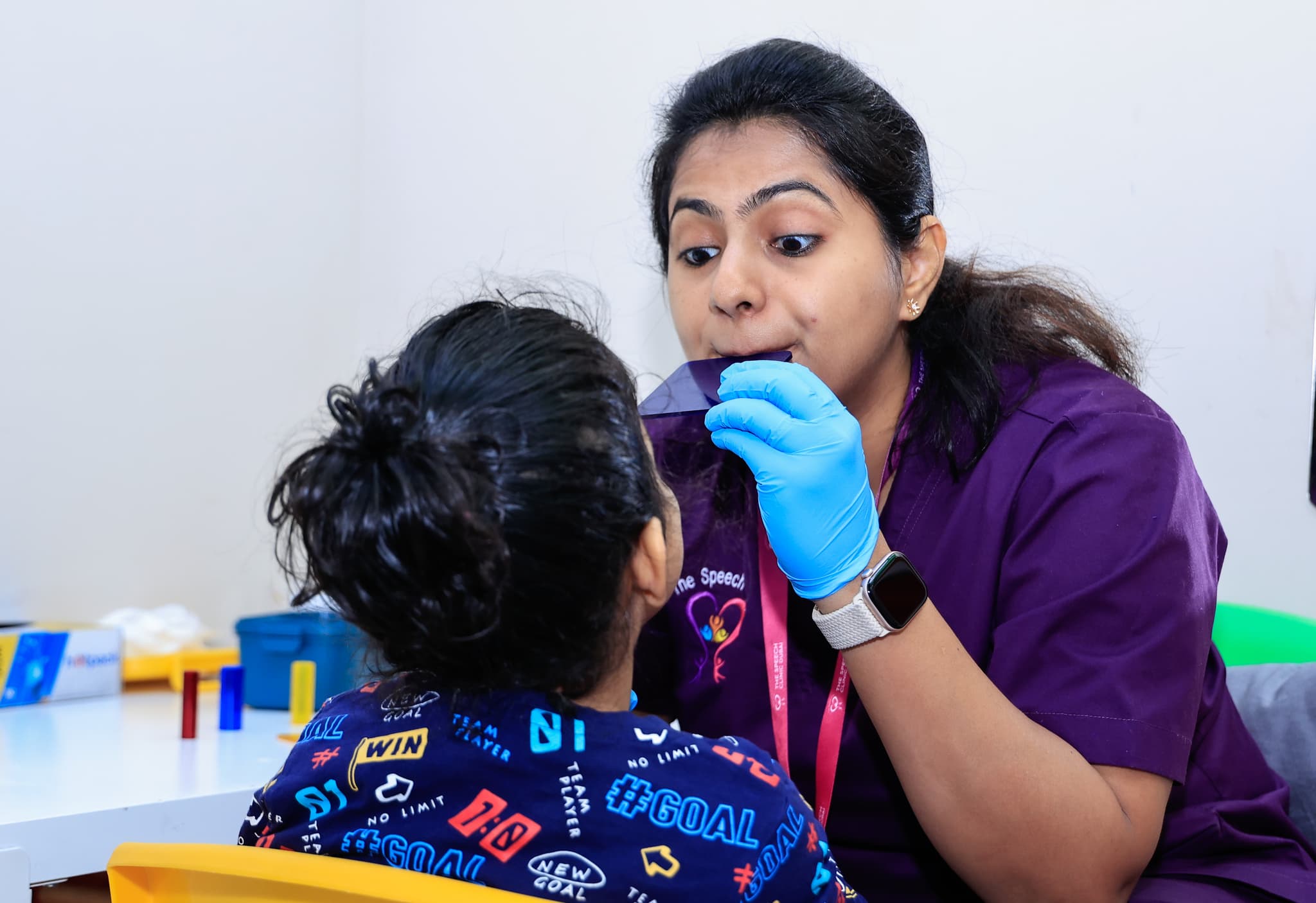
Our team in Dubai Healthcare City assesses expressive language concerns with care and clarity — helping families decide next steps without false reassurance or unnecessary alarm.
Contact us to book an assessment.
Frequently Asked Questions
Many children develop understanding (receptive language) ahead of spoken words (expressive language). A modest gap can be typical. A large or persistent gap — strong comprehension with very few words — may indicate an expressive language delay and deserves professional assessment.
Often yes — “late talker” describes children who start using spoken words later than peers, sometimes with stronger understanding. Late talking is not a guarantee they will catch up without support. See also our overview of speech delay in children.
Concern rises when vocabulary stays very limited, gestures replace almost all words past expected ages, word combining does not emerge, or frustration affects daily life. Age-specific guidance for toddlers is on speech delay in 2-year-olds.
No. Some children catch up with time and rich language exposure; others need structured support. It is not possible to promise that every late talker will catch up without evaluation. Assessment helps families choose monitoring versus early intervention wisely.
Clinicians typically compare understanding and expression, observe how the child communicates wants and needs, review gestures and social engagement, and consider hearing. Findings guide whether coaching, therapy, or further referral is appropriate.
Therapy often focuses on building expressive vocabulary, motivating communication in routines, and coaching parents on how to create opportunities for words without pressure. Approaches are individualized — see Speech & Language Therapy.
Book an Assessment
If your child understands more than they can say, an assessment can clarify whether monitoring or early support is the better path.
Prefer to call? +971 50 885 7146