Social Communication Difficulties in Children in Dubai
My child can talk — but struggles socially
Many parents in Dubai notice that their child has words, sentences, or even a strong vocabulary — yet still finds conversations, friendships, or social situations difficult. Social communication difficulties in children relate to the social use of language and communication, not simply whether a child can speak. This page explains common patterns in clear language and when a professional assessment may help. It is educational information — not a diagnosis of your child.
For clinical speech and language services, see Speech & Language Therapy. To discuss an assessment, contact us.
What Are Social Communication Difficulties?
Social communication refers to how we use language and non-verbal signals to connect with others — taking turns, sharing ideas, reading social context, and adjusting how we communicate for different people and situations. Social communication difficulties describe ongoing challenges with this social use of communication, beyond occasional awkward moments that many children experience while learning.
A child may understand or express words yet still struggle to use language effectively with peers, teachers, or family members. Understanding the pattern — without labeling too quickly — helps families decide whether monitoring, everyday support, or professional guidance is most appropriate.
Common Signs of Social Communication Difficulties
Parents may notice signs such as:
- •Difficulty with turn-taking in conversation — talking over others or not knowing when to respond
- •Difficulty starting or maintaining conversations with peers or adults
- •Difficulty staying on topic or shifting topics appropriately
- •Difficulty understanding social cues such as tone of voice, facial expressions, or body language
- •Difficulty adjusting communication for different situations — for example home vs school vs play
- •Challenges joining play or interacting with peers, even when motivated to connect
- •Difficulty understanding implied meaning, humour, or indirect language — depending on age and development
Individual signs do not confirm a specific condition. A professional assessment considers the full picture — including age, context, and overall development — rather than one behavior alone.
My Child Talks, but Struggles to Communicate Socially
This is a common and important distinction for families. Having vocabulary or clear speech does not always mean a child can use language effectively in social situations.
A child might name objects, answer questions in structured settings, or use long sentences — yet still find it hard to initiate a conversation, respond to a peer's comment, read when someone is bored or confused, or know how to repair a conversation that has gone off track.
The social use of language in children involves more than word knowledge. It includes timing, shared attention, emotional connection, and adapting messages for the listener — skills that develop gradually and may need targeted support when they do not progress as expected.
Social Communication Difficulties vs Speech Delay
Speech delay typically means a child is developing first words, phrases, or sentence structure more slowly than expected for their age — for example a late talker or a child with limited expressive vocabulary.
Social communication difficulties often appear when a child already talks but struggles with the social application of language — conversations, peer interaction, and reading social context. Some children experience both; others have strong language development with pragmatic communication challenges only.
For guidance focused on late talking and speech delay, see our speech delay in children page. This page stays focused on the social use of communication rather than delayed language acquisition.

Social Communication Difficulties vs Typical Shyness
Shyness is a normal personality difference. Many children are quiet in new settings, need time to warm up, or prefer smaller social groups — without having a communication disorder.
A shy child may still follow conversational turns with familiar people, understand social cues reasonably well, and participate comfortably once they feel safe. Social communication difficulties may be worth exploring when challenges persist across familiar settings and affect daily participation — not only first meetings or new environments.
Quiet temperament and social communication difficulties are not the same thing. Avoid labeling normal personality differences as disorders, and seek guidance when persistent patterns affect your child's daily life.
Social Communication and Pragmatic Language
Pragmatic language refers to the rules and skills we use to communicate socially — greeting others, asking questions, giving relevant answers, staying on topic, and using tone and gestures appropriately. Pragmatic communication difficulties can occur when grammar and vocabulary are developing well but social language use is harder.
Examples may include speaking at length without noticing the listener's interest, answering literally when a question expects inference, or struggling with conversational repair when misunderstandings happen. These patterns vary by age and do not confirm a specific diagnosis from examples alone.
Social Communication and Autism
Social communication difficulties do not automatically mean autism. Many children with conversational or pragmatic challenges do not have autism. Some autistic children also have social communication needs — but social patterns alone cannot confirm or rule out autism. Only appropriately qualified professionals can evaluate autism, and this page does not provide that evaluation.
When social communication concerns sit alongside broader developmental questions, a thoughtful, multidisciplinary view may be helpful. For how speech and language therapy can support autistic children more broadly, see Speech Therapy for Autism. Other services — including ABA therapy when clinically indicated — may be part of a wider plan, but social difficulties should be assessed on their own merits first, without assuming one explanation for everything.
How Social Communication Difficulties Can Affect Daily Life
Social communication challenges can show up across everyday settings:
Home
Family conversations, explaining needs, responding to questions, or joining discussions at mealtimes may feel harder than expected.
School
Following classroom discussions, understanding instructions with social context, or participating in group work may be challenging.
Play
Joining games, negotiating roles, or maintaining shared pretend play may be difficult even when a child wants to participate.
Peer interaction
Making friends, entering group play, or keeping up with back-and-forth social exchanges may cause stress or isolation.
Conversations
Starting topics, taking turns, staying on subject, or knowing when to stop talking may not come naturally for every child.
Impact varies widely. Some children manage well in structured settings but struggle in unstructured peer play; others find group conversations at home or school especially difficult. Understanding where challenges appear helps guide appropriate support.
When Should Parents Consider an Assessment?
A social communication assessment may be appropriate when:
- •Social communication challenges persist over time and affect friendships, school, or family routines
- •A child talks but consistently struggles with conversations, turn-taking, or peer interaction
- •Misunderstandings or social frustration occur frequently in daily life
- •Teachers or caregivers raise consistent concerns about social language use
- •You feel unsure whether your child's social struggles are typical or something more significant
When to seek a social communication assessment is a reasonable question at any stage of concern — you do not need to wait for problems to become severe.

How Professional Support May Help
Professional support focuses on understanding how a child communicates socially and what practical steps may help. After assessment, support may include:
- •Building conversational skills such as turn-taking, topic maintenance, and appropriate responses
- •Supporting understanding of social context, non-verbal cues, and implied meaning at an age-appropriate level
- •Coaching caregivers and teachers on strategies that fit real routines
- •Practising peer interaction in structured or semi-structured settings when appropriate
Progress varies by child. Support aims to improve participation and confidence — not to promise a cure or fixed timeline. For clinical services, visit our Speech & Language Therapy page. This condition page stays educational rather than competing for service booking keywords.
Different Forms of Support
Support may look different for each child. After assessment, professionals may recommend individual sessions, small-group practice, or specific approaches. The pages below explain each format or method in detail — this section only introduces them briefly:
Group Therapy
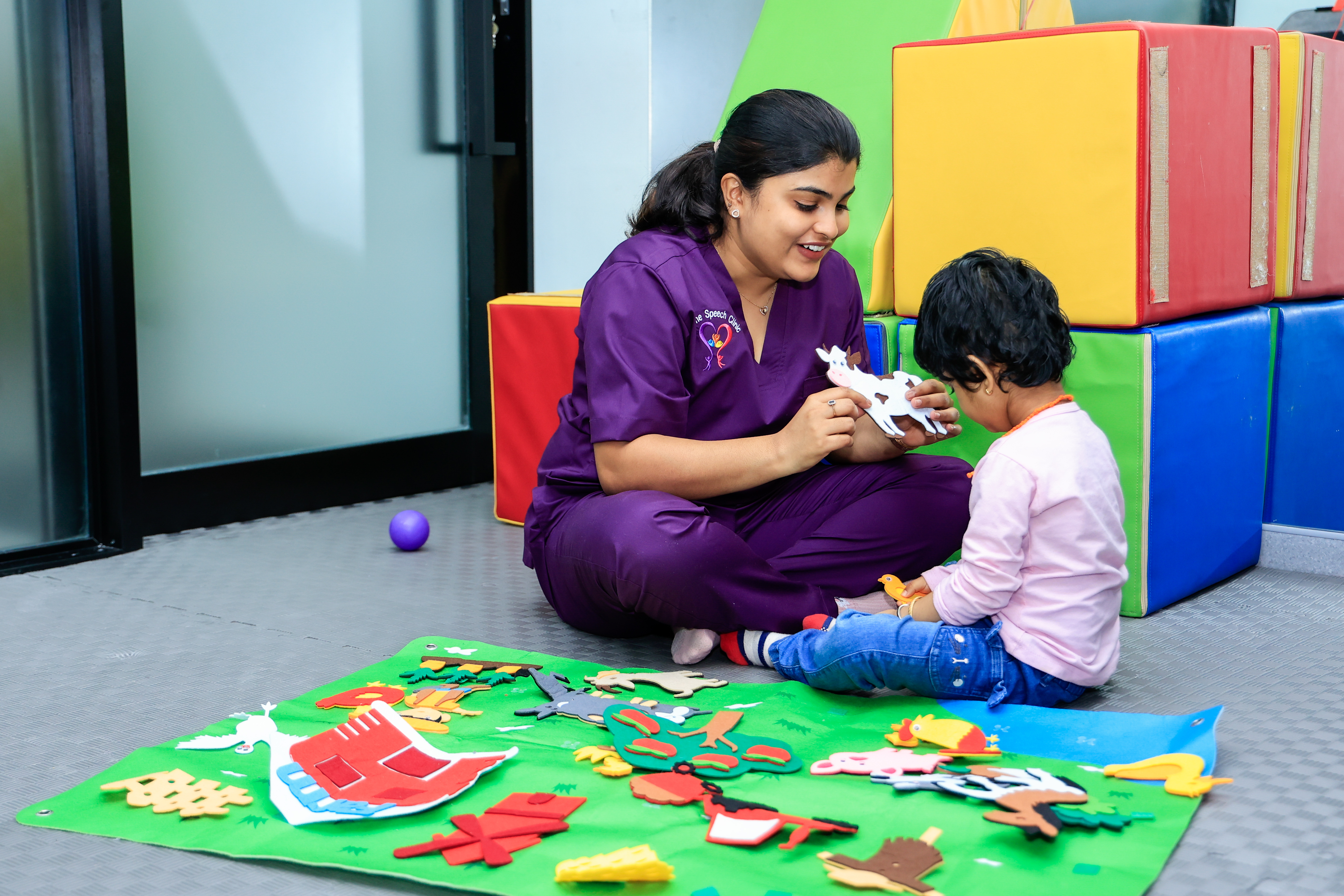
Structured peer settings where children practise turn-taking, conversation, and group participation with guided support.
More Than Words
An approach focused on interaction, joint attention, and communication intent — especially for younger children building social connection.
DIR Floortime
A relationship-based approach that supports emotional connection and back-and-forth communication through child-led play.
Why Choose The Speech Clinic?
The Speech Clinic is a multidisciplinary pediatric therapy center in Dubai Healthcare City (Building 47). Families seeking clarity about social communication difficulties in children in Dubai can access:
- •Speech-language pathologists who assess pragmatic language and social communication as part of a broader profile
- •Individualized plans — not one-size-fits-all programs
- •Access to evidence-informed approaches including group formats, More Than Words, and DIR Floortime when appropriate
- •Coordinated care across speech therapy and other pediatric services when needs overlap
Learn more on Why Choose Us and Speech & Language Therapy.
Frequently Asked Questions About Social Communication Difficulties in Children
Some children take longer to read facial expressions, tone of voice, or unspoken social rules — especially in busy or unfamiliar settings. Occasional missteps are common as skills develop. It may be worth a closer look when difficulty understanding social cues is persistent, affects friendships or daily routines, or causes significant frustration for the child or family. A professional assessment can clarify whether support is needed — without diagnosing from a checklist alone.
Shyness is a normal personality trait. Many quiet children warm up over time and communicate comfortably with familiar people. Social communication difficulties may be worth exploring when a child has ongoing trouble with turn-taking, staying on topic, joining play, or adjusting how they communicate across situations — beyond typical initial reserve. Shyness alone does not indicate a disorder, and not every social struggle requires therapy.
Speech delay usually means a child is developing words, phrases, or sentence structure more slowly than expected for their age. Social communication difficulties often involve using language socially — conversations, social cues, peer interaction — even when vocabulary or speech is developing adequately. For late talking and speech delay guidance, see our speech delay in children page. The two can overlap, but they are not the same concern.
Pragmatic language refers to the social use of communication — knowing when to speak, how to take turns, how to stay on topic, and how to adjust language for different listeners or situations. Pragmatic language difficulties in children can show up as strong vocabulary but difficulty applying words effectively in real conversations and social settings.
No. Social communication difficulties can occur in many children, with or without autism or other developmental differences. Difficulty with conversations or social cues alone does not mean a child is autistic. When concerns sit alongside broader developmental questions, a thoughtful, multidisciplinary assessment may be helpful — without jumping to conclusions from social patterns alone.
Consider an assessment when social communication challenges persist, affect school or peer relationships, cause significant daily frustration, or do not improve with patient support at home. You do not need a label before seeking guidance. Contact The Speech Clinic to discuss whether an evaluation is appropriate for your child.
No. Some children benefit from short guidance or environmental changes; others need structured professional support over time. An assessment helps clarify what level of support fits your child's needs. Learn about clinical options on our Speech & Language Therapy service page without assuming therapy is always required.
After assessment, support may focus on conversational skills, understanding social context, peer interaction, and practical strategies for home and school. Support may be individual, in small groups, or through specific approaches depending on the child's profile. Progress varies — support aims to build participation and confidence, not to guarantee a specific outcome or timeline.
Book an Assessment
If social communication difficulties are affecting your child's conversations, peer relationships, school participation, or daily life, an assessment can help clarify next steps. Our team in Dubai Healthcare City is ready to listen and guide your family.
Prefer to call? +971 50 885 7146