Speech Therapy for Autism
Parents often search for speech therapy for autism when a child struggles to express needs, uses scripts or echolalia, finds conversation hard, or needs a reliable way to communicate beyond spoken words. This guide explains how speech and language therapy can support autistic children. It is educational, not a diagnosis or treatment promise.
Looking for social communication specifics? See social communication difficulties in children. Clinic services and next steps are covered toward the end of this page.
What Is Speech Therapy for Autism?
Speech therapy for autism means using speech and language pathology approaches to support an autistic child's ability to understand others and to express themselves — through speech, language, social communication, or AAC. Communication is the focus; changing who the child is is not.
The aim is functional communication and greater participation in everyday interactions. Speech therapy does not cure autism, treat an underlying “cause” of autism, or promise a specific outcome. Autistic children have different profiles; support is individualized.
Areas speech therapy may address include understanding language, using words or phrases, social communication, speech clarity, gestalt language processing and echolalia, AAC, and related feeding or oral-motor needs when clinically relevant.
How Can Speech Therapy Help Autistic Children?
Speech and language therapy can work on the communication skills that help an autistic child connect and participate day to day. Depending on assessment findings, therapy may support:
- •Understanding spoken language and following everyday directions
- •Expressing needs, ideas, and feelings — verbally or with AAC
- •Moving from scripts or echolalia toward more flexible language when appropriate
- •Social communication for conversations, play, and classroom interactions
- •Speech clarity when motor speech or articulation challenges affect intelligibility
Progress looks different for every child. Therapy aims to support communication; it does not guarantee outcomes or replace other supports a family may need.


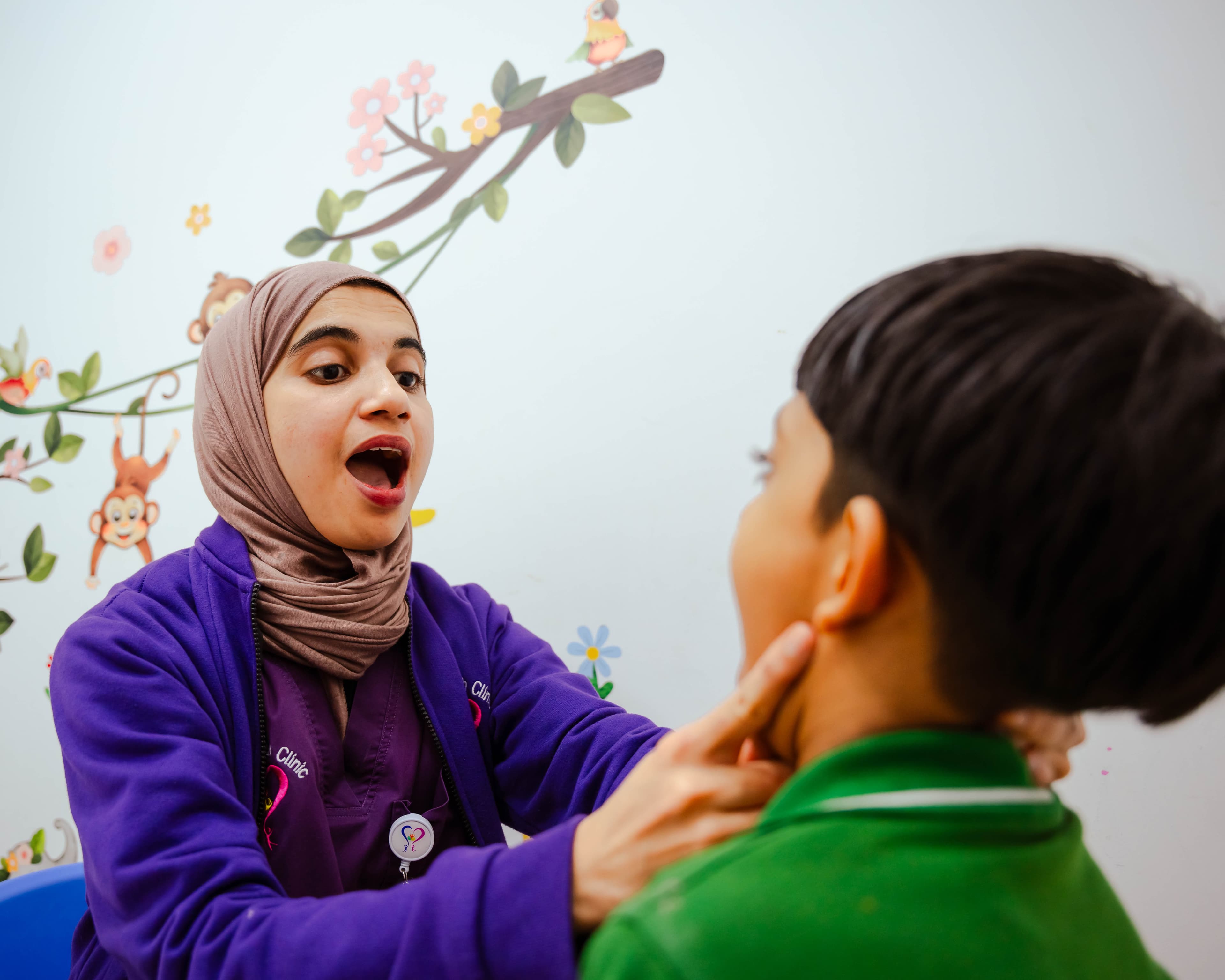
Language, Echolalia, and Gestalt Language Processing
Many autistic children learn language in longer “chunks” — scripts from media, delayed echolalia, or repeated phrases — rather than building one word at a time. Gestalt language processing (GLP) describes this path. Scripts are often meaningful communication, not empty repetition.
Speech-language pathologists who work with gestalt language processors may support acknowledging scripts, modeling language that fits the child's stage, and gradually helping language become more flexible when that is the goal. GLP is one approach among several; it is not required for every autistic child.
At the clinic, Gestalt Language Processing is one of the specialized approaches offered within speech and language therapy.
Social Communication Support
Social communication includes starting and maintaining interaction, understanding context, taking turns, repairing misunderstandings, and adjusting language for different people and settings. Some autistic children find these skills effortful even when they have strong vocabulary or interests.
Speech therapy may support social communication through play-based interaction, caregiver coaching, and practice in naturalistic contexts. Social communication difficulties do not automatically mean autism — and not every autistic child needs the same social focus. For a dedicated parent guide, see social communication difficulties in children.
AAC and Alternative Ways to Communicate
Augmentative and Alternative Communication (AAC) includes pictures, signs, communication boards, and speech-generating devices or apps. AAC can give a child a reliable way to be understood while spoken language continues to develop — or as a long-term communication system.
Using AAC does not “stop” speech. Many families use AAC alongside speech therapy goals. The Speech Clinic offers AAC support including SpeechSync AAC, designed to help children with complex communication needs express themselves more effectively.

Speech Clarity and Motor Speech
Some autistic children also have difficulty planning or coordinating the movements for clear speech. When intelligibility is limited despite strong understanding, assessment may look at articulation, phonological patterns, or motor speech conditions such as childhood apraxia of speech (CAS). Autism and CAS can co-occur; they are not the same thing.
Approaches such as PROMPT may be used when motor speech support is indicated. For CAS-focused education, see childhood apraxia of speech, and our parent guide on autism and apraxia of speech.
Speech Therapy vs Other Therapies for Autism
Autistic children may receive more than one type of support. Therapies address different needs and often work best when goals are coordinated rather than competing.
Speech and language therapy
Communication, language, speech clarity, social communication, and AAC when needed.
Occupational therapy
Daily functioning, sensory processing, fine motor skills, self-care, play, and participation.
ABA therapy
Learning and behavior supports using applied behavior analysis approaches when clinically indicated.
When daily participation or sensory-motor needs are primary, families may also explore occupational therapy for autism or ABA therapy. Those are different types of support from speech and language therapy. This page stays focused on communication.
When Might a Child Benefit From Speech Therapy?
Consider speech therapy when communication difficulties regularly affect daily life — not solely because a child is autistic. Examples include:
- •Limited spoken language or difficulty expressing needs
- •Heavy use of scripts or echolalia with limited flexible language
- •Challenges with conversation, peer play, or classroom communication
- •Unclear speech that others struggle to understand
- •Need for AAC or a more reliable communication system
Not every autistic child needs speech therapy. Assessment helps clarify whether speech and language support is a useful next step.
What Happens During Pediatric Speech Therapy?
While every plan is individualized, pediatric speech therapy typically includes:
- •Assessment — understanding how the child communicates and what gets in the way
- •Communication goals — priorities that matter to the child and family at home and school
- •Therapy activities — often play-based and matched to language, speech, social, or AAC goals
- •Caregiver involvement — strategies that can be used outside the clinic
- •Progress monitoring — adjusting the plan as needs change
Exact session structure depends on the child and the clinic pathway recommended after evaluation.
Speech Therapy for Autism at The Speech Clinic Dubai
The Speech Clinic is a multidisciplinary pediatric therapy center in Dubai Healthcare City. Our speech and language team supports children — including autistic children — with language development, gestalt language processing, social communication, motor speech approaches such as PROMPT, and AAC including SpeechSync, working alongside families and other therapy disciplines when helpful.
This page is educational. For service details, local clinic information, and how to begin, visit our speech and language therapy services page, or contact us to discuss whether an assessment is a good next step.
Frequently Asked Questions About Speech Therapy for Autism
Speech therapy for autism focuses on helping autistic children communicate — through spoken language, social communication, or other methods such as AAC. It supports functional communication and participation. It does not cure autism or change a child's neurotype.
Speech and language therapy may support understanding and using language, building functional phrases, social communication, speech clarity, and alternative communication when speech is limited. Goals are based on how that child communicates in real life — not a one-size-fits-all plan.
Yes. Many autistic children communicate through gestalt language processing — scripts, delayed echolalia, or longer phrases used as meaningful units. Therapists trained in this approach may support moving from scripts toward more flexible, self-generated language when that matches the child's profile.
No. The goal is functional communication. For some children that includes spoken words; for others it includes AAC such as pictures, signs, or speech-generating apps. Speech therapy can support whichever methods help the child be understood.
No. Autistic children have different communication strengths and support needs. Speech therapy is worth considering when language, speech, social communication, or access to a reliable communication system regularly limits daily life — not simply because a child is autistic.
A speech-language pathologist typically assesses how the child understands and expresses communication, identifies goals with the family, and uses play-based and structured activities matched to those goals. Caregivers are usually involved so strategies carry over into home and school routines.
Speech and language therapy focuses on communication — speech, language, social communication, and related areas. Occupational therapy focuses on daily functioning: sensory processing, motor skills, self-care, play, and participation. Many autistic children receive both when needs overlap.
ABA (applied behavior analysis) focuses on learning and behavior supports. Speech therapy focuses specifically on communication and language. They are different disciplines; some children receive both when clinically appropriate. This page stays focused on speech and language support.
Explore Speech and Language Therapy Services
If this guide helped you understand how speech therapy can support autistic children, continue to our speech and language therapy service page — or get in touch to discuss an assessment in Dubai Healthcare City.
Prefer to call? +971 50 885 7146