Childhood Apraxia of Speech Therapy in Dubai
Looking for childhood apraxia of speech support in Dubai?
If your child struggles to form clear words despite trying hard to communicate, you may have heard about childhood apraxia of speech (CAS) — also called developmental verbal dyspraxia in some settings. This page explains what CAS is, how it differs from other speech difficulties, and how families in Dubai can seek a thoughtful assessment. It is educational information, not a diagnosis.
For therapy services, see Speech & Language Therapy. To arrange a pediatric apraxia assessment, contact us.
What Is Childhood Apraxia of Speech?
Childhood apraxia of speech is a motor speech disorder that affects speech motor planning — the brain's ability to plan and sequence the precise movements needed for talking. The challenge is not usually a simple lack of ideas or vocabulary; many children with CAS understand language and want to speak, but have difficulty coordinating articulator movements consistently.
CAS is different from a general speech delay in children, though families sometimes explore both concerns. A speech-language pathologist evaluates the full communication picture before suggesting next steps.
Signs of Childhood Apraxia of Speech
Parents and caregivers often notice patterns such as:
- •Inconsistent errors — the same word sounds different each time
- •Difficulty imitating sounds, words, or short phrases
- •Visible searching or “groping” with the mouth when trying to speak
- •More trouble as words get longer or more complex
- •Vowel distortions or unusual stress and rhythm in speech
- •Frustration when speech does not match what the child intends
These signs do not confirm CAS on their own. Similar patterns can appear in other speech sound difficulties. A professional assessment is the appropriate next step if you are concerned.
How Childhood Apraxia Differs From Speech Delay
Speech delay generally means a child is acquiring speech or language skills more slowly than expected. Progress may still follow a familiar developmental path. With CAS, the core challenge is planning and sequencing speech movements, which can make progress look uneven — especially when therapy focuses only on vocabulary or general language stimulation.
A speech delay does not automatically mean a child has childhood apraxia of speech. Likewise, not every unclear speaker has CAS. Clarifying the difference guides which childhood apraxia therapy strategies — or other supports — are most relevant.
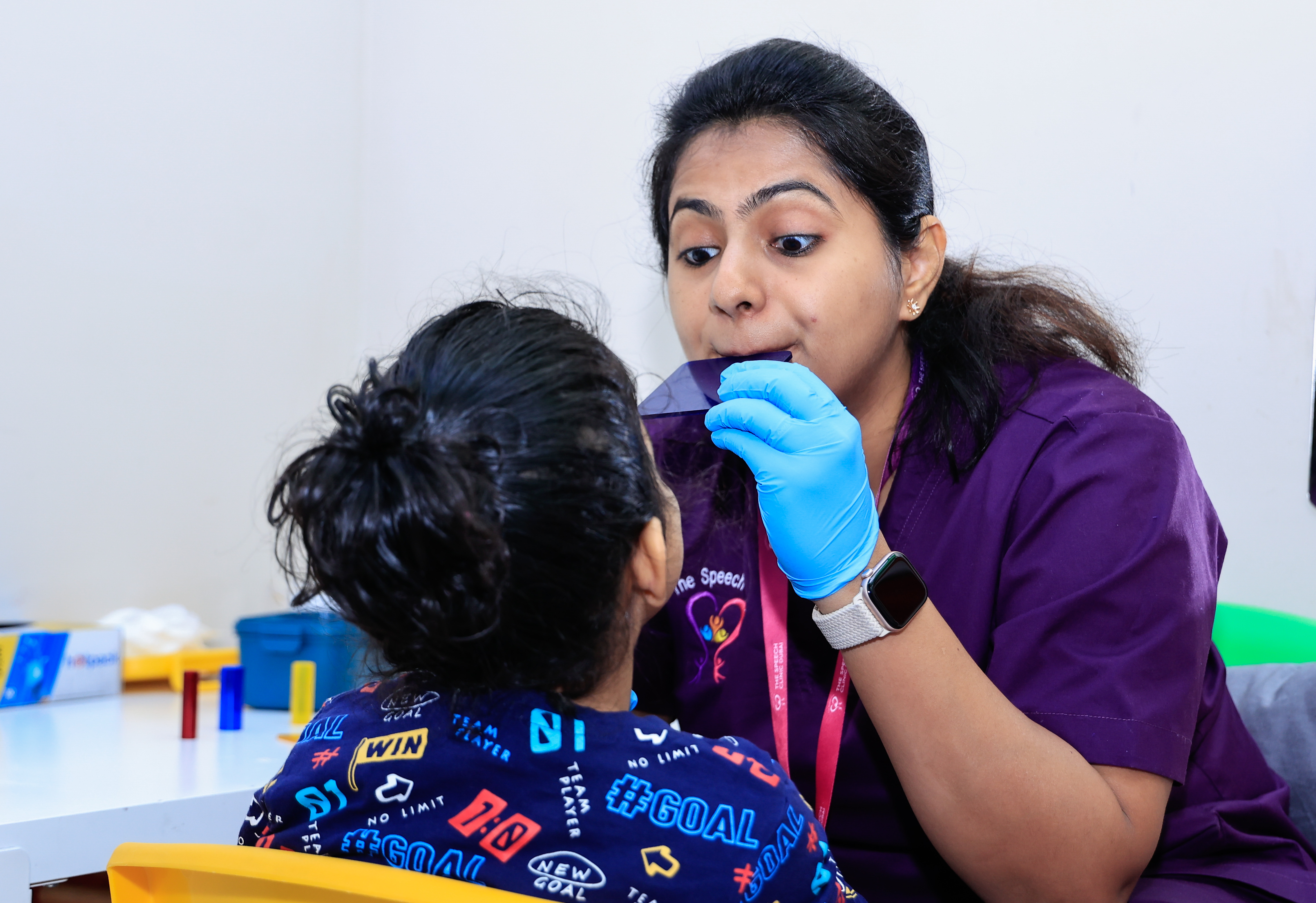


Childhood Apraxia vs Articulation Difficulties
Articulation difficulties typically involve trouble producing specific speech sounds in a relatively consistent way (for example, substituting one sound for another). Practice often targets those sounds in isolation and then in words.
In CAS, errors are more often related to sequencing and consistency across longer or novel utterances. A child may produce a sound correctly in one word but struggle when the same sound appears in a different word or phrase. Distinguishing articulation needs from apraxia of speech in children helps therapists choose the right practice pattern.
Childhood Apraxia vs Dysarthria
Dysarthria is another type of motor speech disorder. It relates more to muscle strength, tone, or coordination for speech — speech may sound weak, slurred, or effortful because of how the muscles move.
CAS is primarily about planning and programming the movement sequence, not simply muscle weakness. Some children can show overlapping features, which is why careful assessment matters before assuming one label. Accurate identification supports more appropriate childhood apraxia of speech therapy in Dubai.
Assessment for Childhood Apraxia of Speech
A pediatric apraxia assessment Dubai families can expect may include:
- •Discussion of developmental history and current communication at home and school
- •Observation of how your child communicates in play and interaction
- •Tasks exploring speech sounds, syllable shapes, imitation, and consistency across trials
- •Screening of language understanding, expression, and related factors such as hearing when indicated
Formal CAS diagnosis can be difficult in younger children who cannot yet complete structured motor speech tasks. Clinicians may describe speech motor planning characteristics and recommend therapy that can be adjusted as more information emerges. If progress has stalled elsewhere, parents sometimes find our guides on why apraxia therapy may not be working and how long apraxia therapy can take helpful context — without replacing an in-person evaluation.
How Speech Therapy Can Support Children With CAS
Childhood apraxia of speech therapy Dubai families receive is typically individualized. Sessions often emphasize:
- •Frequent, focused practice of speech movement sequences
- •Multisensory cueing (visual, auditory, and sometimes tactile) matched to the child's needs
- •Functional words and phrases used in daily routines
- •Caregiver coaching so practice continues between sessions
Outcomes vary. Therapy is designed to support clearer, more reliable communication over time — not to promise a cure or a fixed timeline. Learn more about our pediatric Speech & Language Therapy services.
Therapy Approaches Used for Childhood Apraxia
No single method is right for every child with CAS. After assessment, therapists may draw on one or more evidence-informed approaches. The pages below explain each method in more detail — this page focuses on the condition itself, not on ranking those techniques.
PROMPT Therapy
Uses tactile-kinesthetic cues to support speech motor planning and sequencing for clearer sound production.
Kaufman Speech to Language Protocol
Builds speech from a child’s current sounds and syllable shapes toward more complex, functional words.
Nuffield Dyspraxia Program
A structured hierarchy for developmental verbal dyspraxia / CAS, progressing from sounds toward connected speech.
Sensory Motor Approach to Apraxia
Combines tactile, auditory, and visual input to support awareness and planning of speech movements.
Oral Placement Therapy
May be used when sensory and oral-motor foundations need support as part of a broader speech plan.

Childhood Apraxia and Autism
Childhood apraxia of speech is not the same as autism. CAS affects speech motor planning. Autism involves a broader pattern of social communication and behavioral characteristics. Some children have both conditions; many children with CAS do not have autism, and many autistic children do not have CAS.
When speech is limited and social communication differences are also present, a comprehensive evaluation helps avoid assuming one explanation for everything. Read more in our article on autism and apraxia of speech, and explore ABA therapy only when it is clinically relevant for your child's overall plan.
Why Choose The Speech Clinic?
The Speech Clinic is a multidisciplinary pediatric therapy center in Dubai Healthcare City (Building 47). Families seeking childhood apraxia of speech therapy in Dubai can access:
- •Speech-language pathologists experienced with pediatric motor speech concerns
- •Individualized assessment and therapy planning — not a one-size-fits-all program
- •Access to related approaches (PROMPT, Kaufman, Nuffield, sensory-motor, and OPT) when appropriate
- •Coordinated multidisciplinary care when occupational therapy, ABA, or other supports are needed
Learn more on Why Choose Us and our Speech & Language Therapy page.
Related reading
- •PROMPT therapy — tactile cues for speech-motor planning
- •Articulation therapy
- •Pediatric speech assessment
- •AAC therapy for children
- •How long does apraxia therapy take?
- •Autism and apraxia of speech
- •Speech-language therapists
- •Contact the clinic
Frequently Asked Questions About Childhood Apraxia of Speech
Childhood apraxia of speech (CAS) is a motor speech disorder. It affects how the brain plans and sequences the movements needed to produce speech sounds, syllables, and words. Children with CAS often know what they want to say, but have difficulty coordinating the precise movements of the lips, tongue, and jaw for clear speech. Only a qualified speech-language pathologist can assess whether CAS may be present.
Signs can include inconsistent speech errors, difficulty imitating sounds or words, groping movements when trying to speak, vowel errors, and speech that is hard for others to understand — especially as words get longer. Not every child with unclear speech has CAS. Similar signs can appear in other speech sound difficulties, so professional assessment is important.
A speech delay usually means speech or language is developing more slowly along a typical path. CAS involves difficulty with speech motor planning — putting sound sequences together accurately and consistently. A child can have a speech delay without CAS, and some children show features of both. Evaluation helps clarify the difference rather than assuming one explanation.
Pediatric apraxia assessment in Dubai typically includes a parent interview, observation of communication, and tasks that look at how a child produces sounds in isolation, in words, and in longer utterances. Therapists may also review hearing, language understanding, and other factors. Formal diagnosis of CAS can be challenging in very young children; clinicians often describe speech motor planning needs and monitor progress over time.
Yes — childhood apraxia therapy often focuses on frequent, structured practice of speech movements using motor learning principles, cueing, and functional words the child needs every day. Progress varies by child. Therapy aims to support clearer, more reliable communication; it does not guarantee a specific timeline or outcome. Speech & Language Therapy at The Speech Clinic can include individualized support after assessment.
No. CAS is a motor speech condition. Autism involves a broader pattern of social communication differences and other developmental characteristics. Some children have both, but CAS does not mean a child is autistic, and autism does not automatically mean a child has CAS. When both are being considered, a careful multidisciplinary view is helpful. Our autism and apraxia guide explains the overlap in more detail.
Consider a pediatric apraxia assessment if your child has persistent difficulty producing clear words, inconsistent errors, limited progress with general speech practice, or increasing frustration around speaking. You do not need a confirmed diagnosis before seeking help. Contact The Speech Clinic to discuss an evaluation in Dubai Healthcare City.
Approaches are chosen after assessment and may include motor-based methods such as PROMPT, the Kaufman Speech to Language Protocol, the Nuffield Dyspraxia Program, sensory-motor strategies, or oral placement techniques when clinically appropriate. No single method fits every child. Your therapist will explain why a particular approach is recommended for your child's speech motor planning needs.
Book a Speech and Language Assessment
If you are concerned about speech motor planning, unclear speech, or possible childhood apraxia of speech, an assessment can help clarify next steps. Our team in Dubai Healthcare City is ready to listen and guide your family.
Prefer to call? +971 50 885 7146