Oral Placement Therapy in Dubai
What is oral placement therapy?
Oral placement therapy (OPT) uses touch and movement cues so a child can feel where the jaw, lips, and tongue need to go. It is used when hearing a sound and seeing a model are not enough for the child to copy it.
At The Speech Clinic it sits inside pediatric speech and feeding therapy for children through 16 years. It is not a separate clinic, and it is not a promise that speech will become clear after a set number of visits.
Updated 6 October 2026. Educational information from The Speech Clinic Dubai. It describes common concerns and what an assessment may involve. It is not a diagnosis and does not replace an individual assessment.
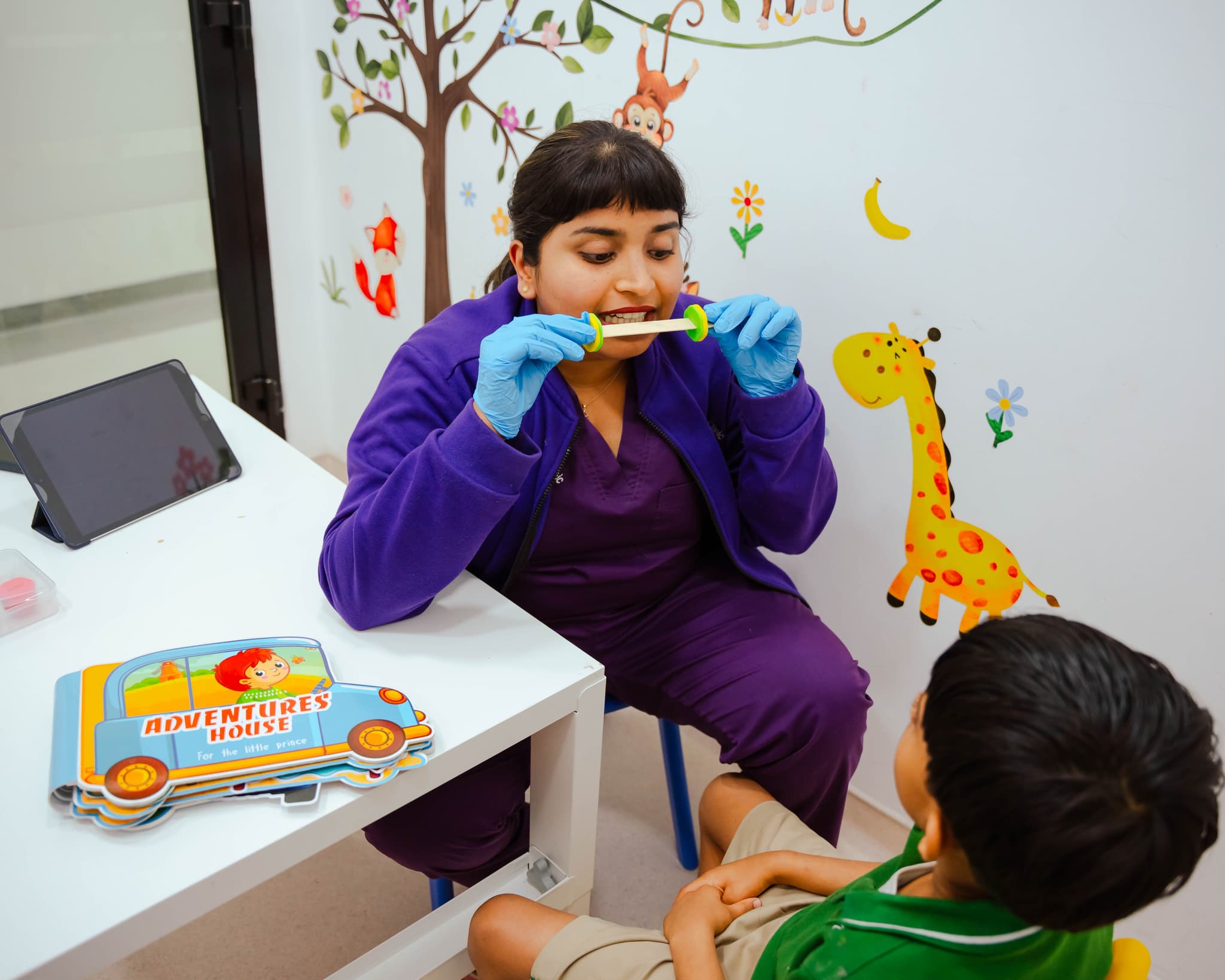
When OPT may be considered
- •Speech that stays unclear even when the child is trying to copy a sound
- •Childhood apraxia of speech or other motor-speech planning needs
- •Feeding tasks that need better jaw, lip, or tongue control, such as chewing or cup drinking
- •Drooling that appears linked to oral awareness or mouth posture, after a feeding or speech assessment
How a session is different from sound practice alone
A speech-language pathologist may use therapy tools and hands-on cues so the child feels the target movement, then connects that movement to a sound, word, or feeding task. Practice stays short and specific. The goal is a movement the child can use in real speech or at mealtimes, not a drill that only works with the tool.
OPT is one method among others. Some children are a better fit for PROMPT, the Kaufman protocol, or sound-based articulation therapy. Assessment decides which mix to use.
What parents can expect
The first visit looks at speech, oral movements, and feeding if that is part of the concern. You should leave with a plain explanation of what the therapist saw and whether OPT is relevant. Home practice, when it is given, uses a few movements you can actually do between sessions.
If saliva control, swallowing safety, or growth is the main worry, the plan may also involve feeding therapy or a referral back to your pediatrician.

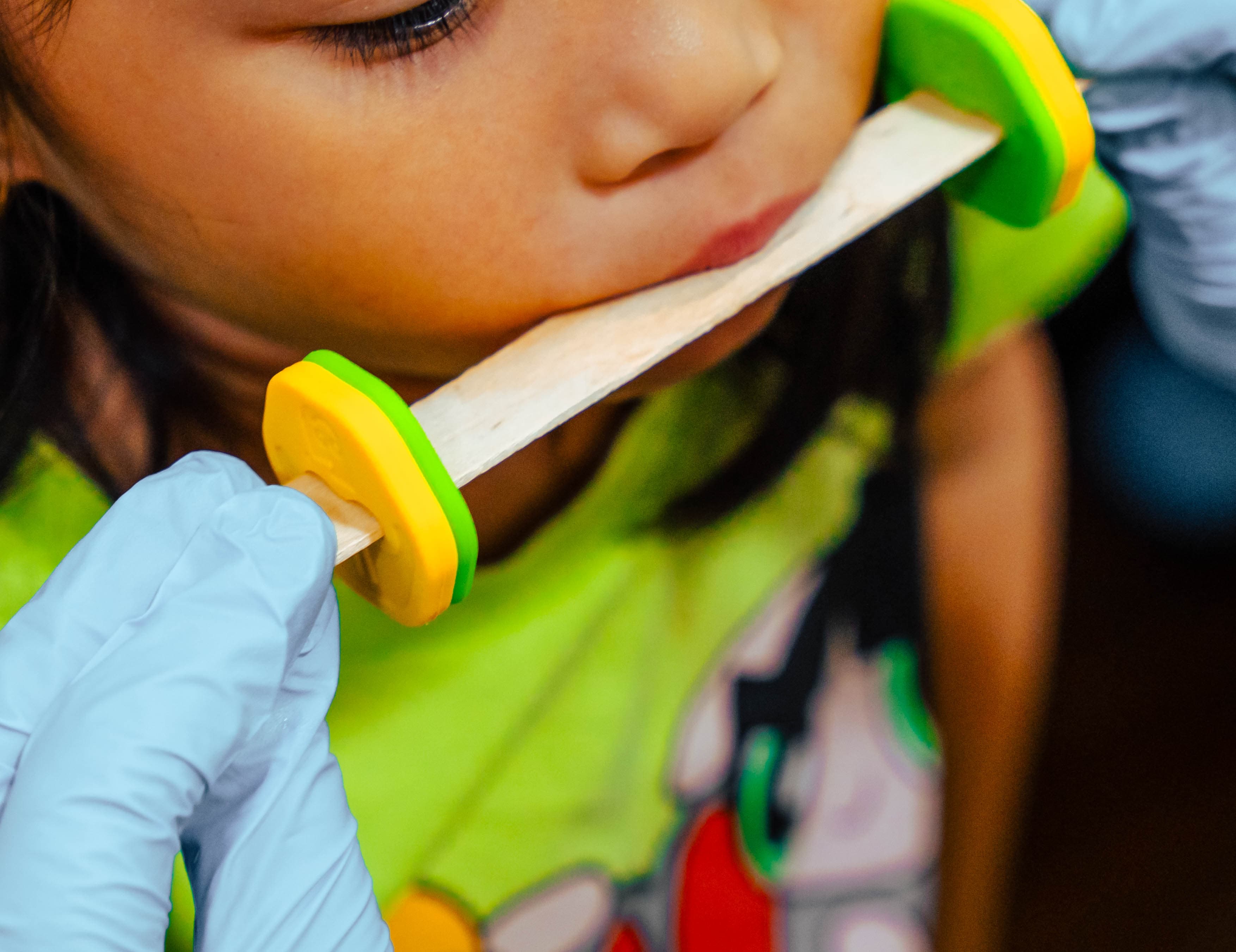
Questions about oral placement therapy
Not exactly. General mouth exercises that are not tied to a speech sound or a feeding task often do not change speech. OPT is used when a specific movement is needed for a sound or for eating, and that movement is then practised in that task.
It can be one part of motor-speech therapy when a child cannot find the mouth position for a sound. Apraxia also needs speech practice that builds from sounds into words. See the clinic's childhood apraxia page for how that assessment works.
Sometimes, when assessment suggests awareness or mouth posture is part of the problem. Drooling can also have medical causes, so the therapist will say if a pediatrician or ENT should be involved. There is a separate note on drooling management.
Children from early childhood through 16 years, the same range as the clinic's other pediatric services.
Related reading
Ask whether oral placement therapy fits
If your child cannot copy speech movements, or feeding and saliva control are part of the same concern, an assessment can show whether OPT belongs in the plan. The clinic is in Dubai Healthcare City.
Prefer to call? +971-508857146. You can also send a message from the form on this page, which opens WhatsApp.