PROMPT Therapy in Dubai
What is PROMPT therapy?
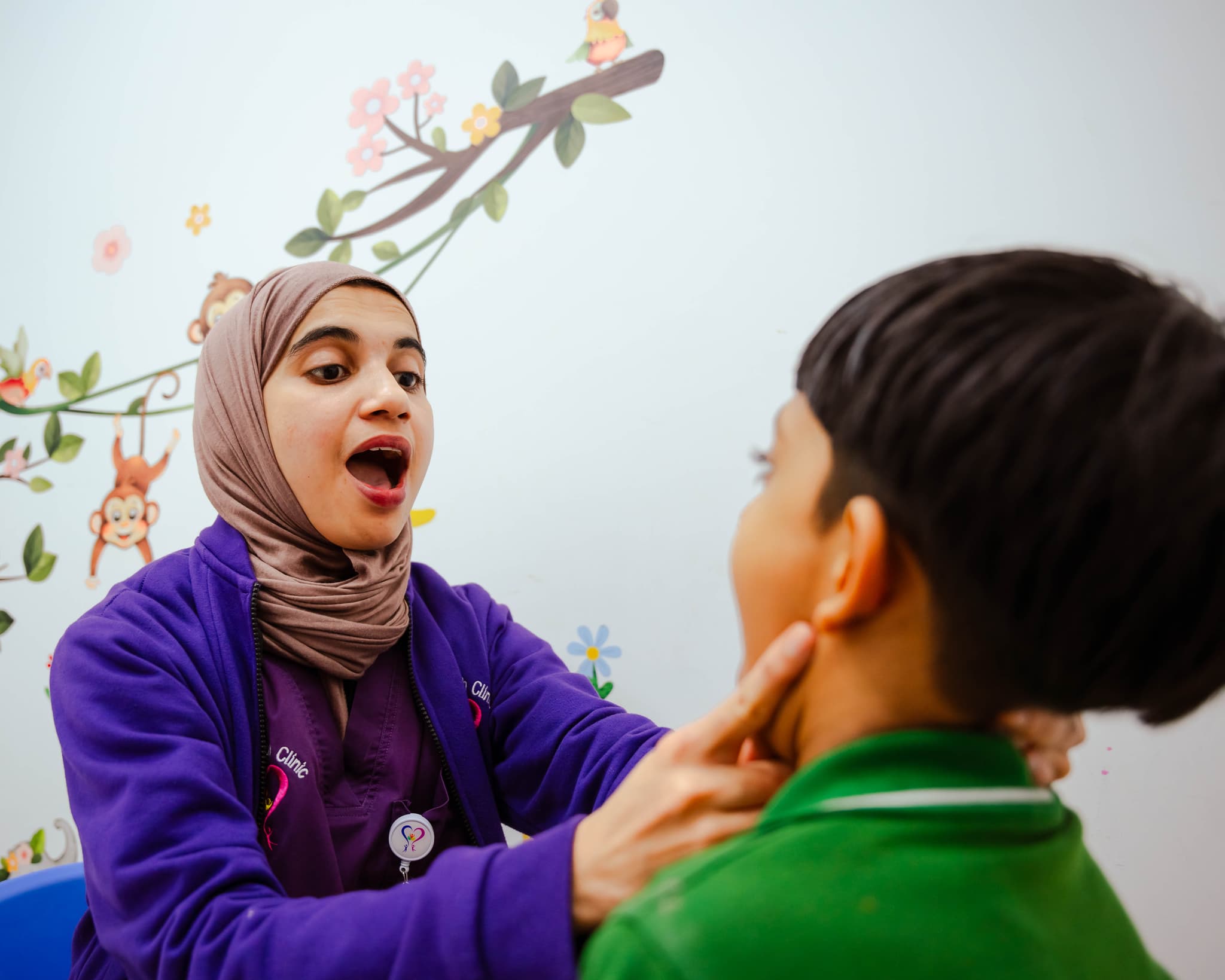
PROMPT (Prompts for Restructuring Oral Muscular Phonetic Targets) is a speech-therapy approach in which the clinician uses touch cues on the face to help a child feel how speech movements are organised. It is used when the main difficulty is planning or coordinating speech movements, not simply missing a vocabulary.
It is one option among motor-speech approaches. It is not a general language programme, and it is not appropriate for every child who is late to talk. A speech assessment decides whether PROMPT, another motor-speech approach, language support, or AAC is the better fit.
Updated 29 September 2026. Educational information from The Speech Clinic Dubai. It describes common concerns and what an assessment may involve. It is not a diagnosis and does not replace an individual assessment.
Who it may be relevant for
PROMPT is most often considered for children with childhood apraxia of speech or other motor-speech difficulties, where the child knows what they want to say but cannot reliably plan the movements. The parent guide to childhood apraxia of speech explains that pattern in more detail.
Children whose main need is vocabulary, understanding, or stuttering are usually supported with a different plan. Touch cues are a tool, not a default for every speech concern.
What assessment may involve
Before PROMPT is recommended, the therapist looks at how the child attempts words: whether errors are consistent, whether sequencing breaks down as words get longer, and how the child responds to a model or a cue. Language, hearing history, and how the child communicates without speech are part of the same visit.
You should be told why a motor-speech approach is or is not being suggested. If you want the outline of a standard speech assessment, read what happens during a pediatric speech assessment.
What a session may involve
In a session, the therapist chooses a small set of functional words and helps the child produce them with auditory models and, when appropriate, tactile cues. Practice is repeated so the movement pattern has a chance to become more reliable. Play is used so the words stay meaningful.
Parents are usually shown what to practise and how much cueing to use at home. More cueing is not always better. The therapist should also say when to fade cues so the child is not dependent on touch for every word.
What PROMPT does not do
PROMPT does not diagnose apraxia by itself, and it does not come with a set timetable for clearer speech. Some children need a different motor approach, such as the Kaufman Speech to Language Protocol or the Nuffield Dyspraxia Programme, which the clinic also describes on its treatment pages. Others need language therapy or AAC alongside, or instead of, speech practice.
The blog post on how long apraxia therapy can take discusses pace without promising a timeline.


Questions about PROMPT
It is most often considered for motor-speech difficulties, including childhood apraxia of speech. It is not a general treatment for every late talker or every child with unclear speech.
Not necessarily. Cues are used when they help the child find a movement, and reduced when the child can produce the word with less help. The amount of cueing is a clinical decision.
No. PROMPT targets speech movement. If a child also has difficulty understanding or building sentences, that need is addressed separately or alongside speech practice.
No. An assessment can explore whether motor planning is part of the picture. PROMPT is chosen after that assessment, not before it.
Related reading
Discuss whether PROMPT is appropriate
If you have been told your child may have a motor-speech difficulty, an assessment can clarify whether PROMPT or another approach fits.
Prefer to call? +971-508857146. You can also send a message from the form on this page, which opens WhatsApp.