Drooling Management for Children in Dubai
How does the clinic approach drooling?
Drooling in children can come from mouth posture, sensory awareness, swallowing frequency, or a medical cause such as reflux or nasal blockage. A speech-language pathologist looks at the oral-motor and feeding side. A pediatrician or ENT looks at medical causes the clinic cannot treat.
When the therapy side is relevant, support may include oral placement work, feeding therapy, and home routines that prompt lip closure and swallows. The clinic does not offer surgery or medication for drooling.
Updated 6 October 2026. Educational information from The Speech Clinic Dubai. It describes common concerns and what an assessment may involve. It is not a diagnosis and does not replace an individual assessment.
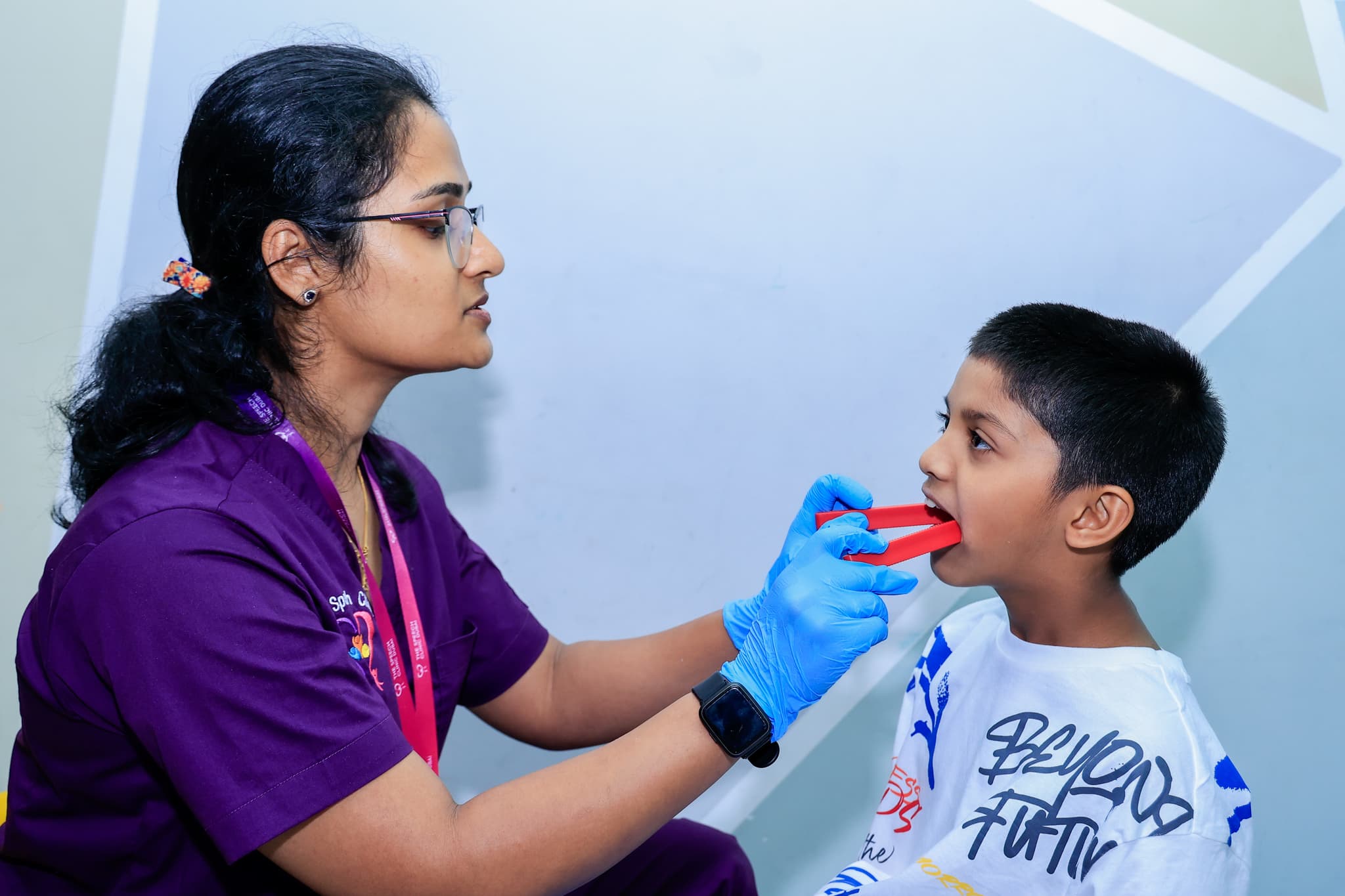
What assessment looks at
- •When drooling happens: at rest, during play, while talking, or at meals
- •Lip closure, jaw position, and whether the child notices wetness
- •How often the child swallows saliva
- •Chewing, cup drinking, and any coughing during meals
- •Whether a doctor should review allergies, enlarged tonsils, reflux, or medication
What therapy may include
If assessment points to awareness and movement, therapy practises the mouth positions the child needs for a closed-lip rest posture and for swallowing saliva, then ties those movements to daily routines. Oral placement therapy is one tool for that. It is not used for every child who drools.
If eating and drinking are also difficult, feeding therapy is the better lead service. If speech sounds are the main concern and drooling is secondary, speech therapy leads and saliva goals are added only when they affect communication.
What this page does not cover
Constant drooling with weight loss, breathing difficulty, or choking needs a medical review first. Therapy at the clinic starts after the child is safe to eat and drink, or alongside a doctor's plan, not instead of one.
Questions about drooling management
Teething and a busy mouth can cause drooling in young children. Drooling that continues well past the toddler years, soaks clothes, or comes with feeding difficulty is worth an assessment.
It can reduce drooling when the cause is oral awareness, posture, or swallow frequency. It cannot treat a structural or medical cause. The therapist will say if you should see a doctor as well.
No. Those decisions sit with a physician. The clinic's role is assessment and therapy for oral movement, feeding, and speech.
Children from early childhood through 16 years.
Related reading
Ask about a drooling assessment
Bring notes on when drooling happens and whether meals are difficult. The speech and feeding team can say whether therapy is useful and whether a doctor should be seen first.
Prefer to call? +971-508857146. You can also send a message from the form on this page, which opens WhatsApp.