Sensory Processing Difficulties in Children in Dubai
Understanding sensory issues in children
Parents often ask why a child hates certain textures, covers their ears in busy places, seeks constant movement, or struggles with dressing and grooming. Sensory processing difficulties in children can contribute to these patterns — but similar behaviors can have other causes too. This guide explains sensory processing in clear, parent-friendly language and when an assessment may help. It does not diagnose your child.
New to occupational therapy? Start with What Is Occupational Therapy?. For therapy services, visit Occupational Therapy. To discuss an evaluation, contact us.
What Is Sensory Processing?
Sensory processing is how the nervous system takes in information from the body and environment, organizes it, and helps a child respond. That includes familiar senses such as sight, sound, touch, taste, and smell, as well as movement and balance (vestibular), body position (proprioception), and internal body signals (interoception).
When processing works smoothly, children can usually filter, tolerate, and use sensory information to play, learn, and care for themselves. When it is harder, everyday input can feel confusing, too strong, or not strong enough.
What Are Sensory Processing Difficulties?
Sensory processing difficulties describe ongoing challenges in registering, interpreting, or responding to sensory information in ways that affect comfort and participation. Families in Dubai may notice sensory sensitivities in children that show up at home, school, or in the community.
These difficulties exist on a spectrum. Some children need only small environmental adjustments; others find many routines limited by overwhelm or by a constant need for more input. Sensory processing difficulties do not automatically mean autism and do not automatically mean a child requires occupational therapy — assessment helps clarify what support, if any, fits.
Common Signs of Sensory Processing Difficulties
Signs vary widely. Parents may notice patterns such as:
- •Strong reactions to noise, bright lights, or crowded spaces
- •Distress with clothing textures, tags, or grooming tasks
- •Limited food variety related to texture or smell
- •Frequent spinning, jumping, crashing, or other intense movement
- •Avoidance of messy play, swings, or unpredictable movement
- •Meltdowns or shutdowns after busy sensory environments
Individual signs do not confirm sensory processing difficulties. Similar behaviors can relate to medical discomfort, fatigue, anxiety, communication barriers, or other developmental factors.
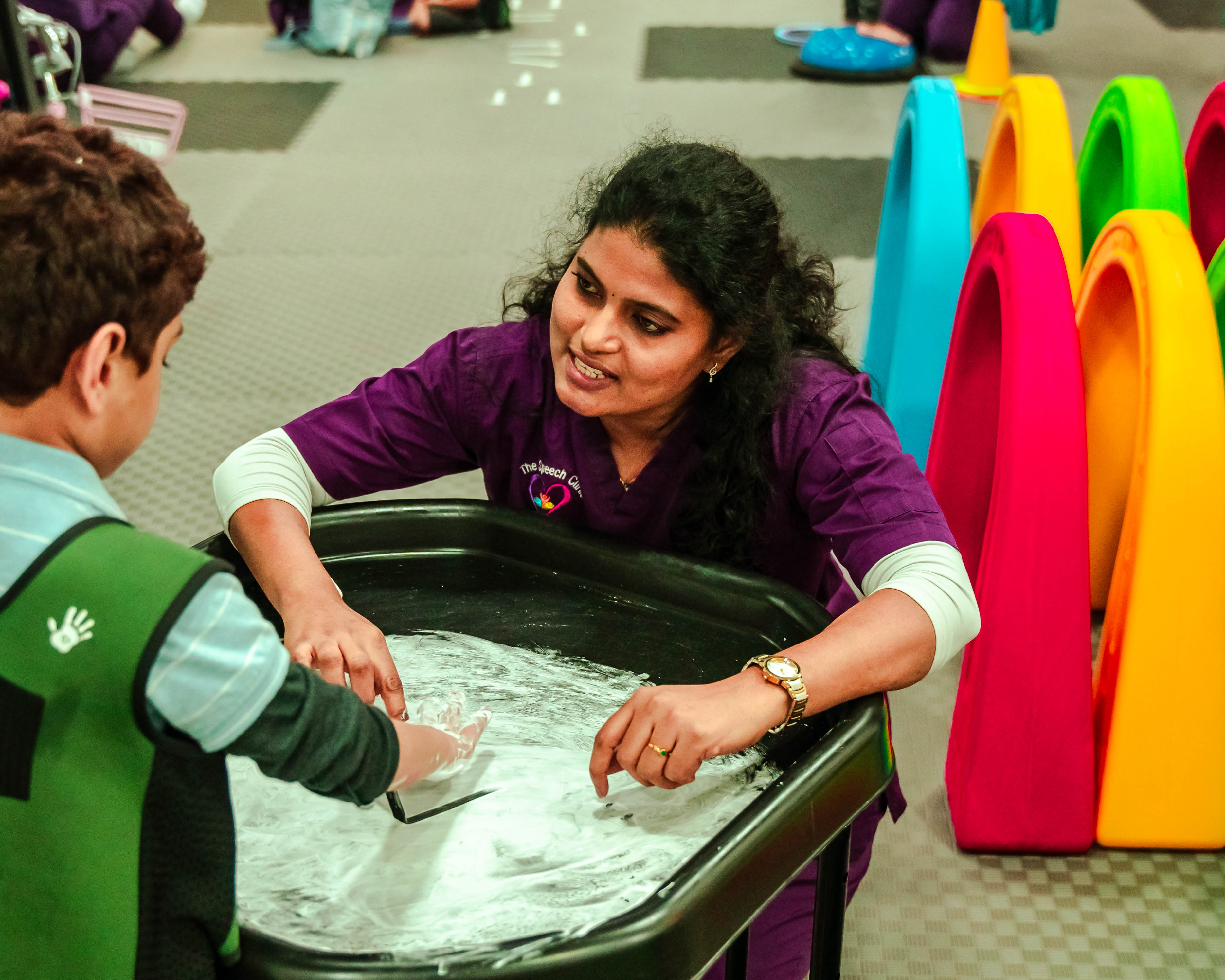
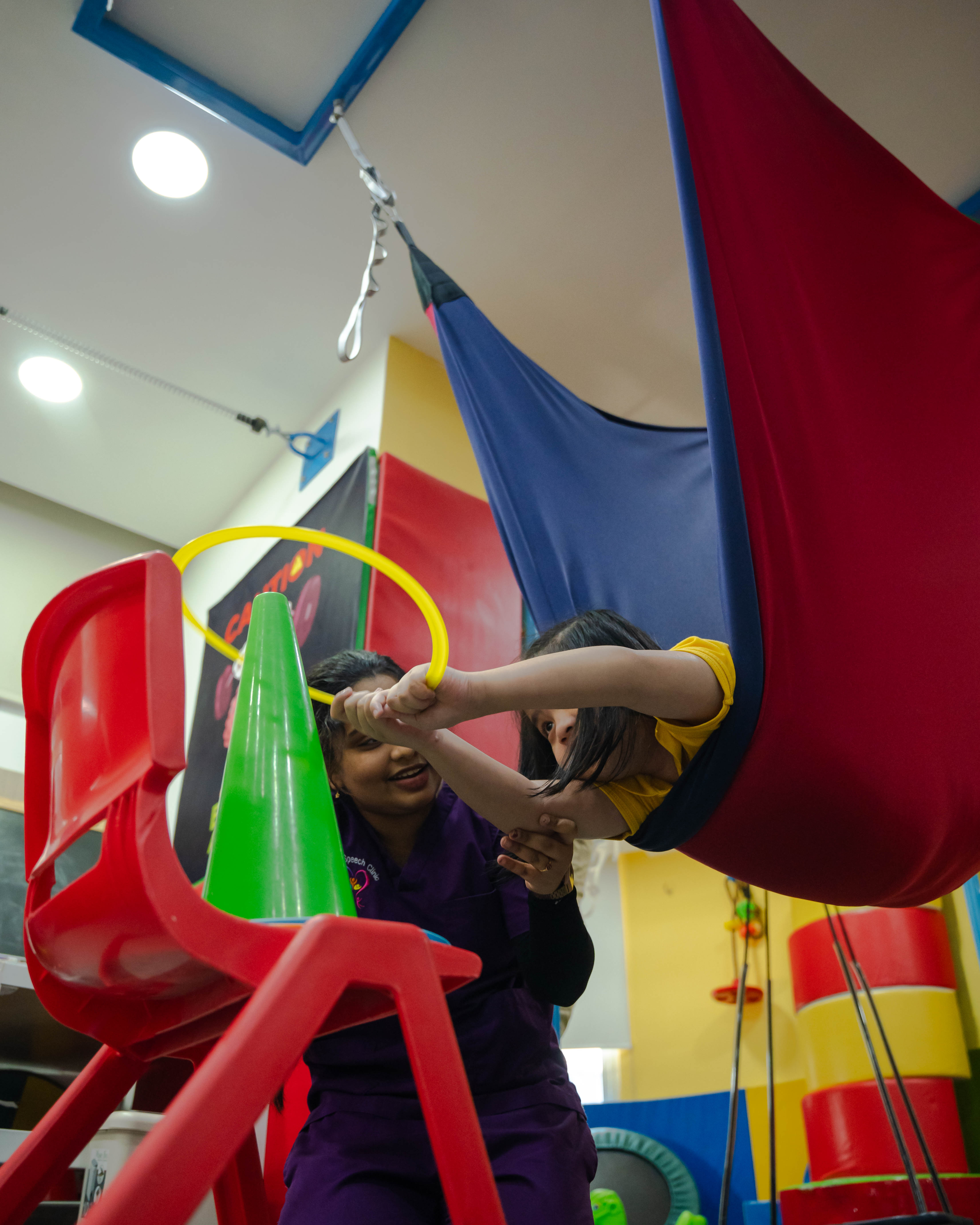

Sensory Seeking vs Sensory Avoiding
Sensory seeking children
May look for more input — movement, touch, deep pressure, or loud play — to feel organized or satisfied. Constant motion can look like “not listening” when the body is asking for input.
Sensory avoiding children
May pull away from sounds, textures, crowds, or unexpected touch. Covering ears, refusing certain clothes, or leaving busy rooms can be protective responses to overload.
Many children show both patterns across different senses or times of day. Understanding the pattern helps families support sensory processing and daily routines more thoughtfully.
Sensory Over-Responsivity and Under-Responsivity
Over-responsivity means ordinary input feels too intense — leading to sensory overload in children during noise, touch, or busy visual scenes. Under-responsivity means a child may not notice input that others register easily, and may appear “tuned out,” slow to respond, or less aware of messy hands or a full bladder.
These descriptions help caregivers and therapists communicate; they are not stand-alone medical diagnoses from a website checklist.
How Sensory Processing Can Affect Daily Life
When sensory processing is hard, impact often shows up in everyday occupations of childhood:
Dressing
Clothing seams, socks, tags, or certain fabrics may feel intolerable — or a child may insist on the same textures every day.
Eating
Strong preferences or refusals around food textures, temperatures, or smells can make mealtimes stressful for the whole family.
Sleep
Settling can be hard when the body feels too alert, too restless, or unsettled by sounds, light, or bedding textures.
School / daycare
Busy classrooms, transitions, sitting still, and group noise can lead to overload, withdrawal, or frequent movement seeking.
Play
Some children avoid messy or noisy play; others seek intense crashing, spinning, or climbing that peers find hard to match.
Personal care
Hair washing, tooth brushing, nail cutting, or bathing can become major battles when touch or sound feels overwhelming.
For practical home environment ideas, see Sensory Regulation at Home.
When Should Parents Consider an Assessment?
An assessment may be worth considering when sensory-related patterns:
- •Regularly limit participation in dressing, eating, sleep, school, or play
- •Cause frequent distress for the child or major family stress
- •Persist across settings despite reasonable routine adjustments
- •Leave you unsure whether the root is sensory, medical, emotional, or mixed
Not every sensory preference needs a clinical pathway. When daily life is significantly affected, a professional perspective can help you decide next steps without jumping to conclusions.

How Occupational Therapy Can Support Sensory Processing
Occupational therapy for sensory processing looks at how sensory responses affect the activities that matter to your child — play, self-care, learning, and family routines. Support may include:
- •Understanding your child's sensory patterns through assessment and observation
- •Practical strategies for home and school environments
- •Play-based activities matched to regulation and participation goals
- •Collaboration with caregivers so strategies fit real daily life
Outcomes vary by child. Therapy aims to support participation and comfort — not to guarantee a specific result. Explore pediatric occupational therapy at The Speech Clinic, or our occupational therapy in Dubai overview if you are comparing local options.
Sensory Integration Therapy
Sensory integration is one therapeutic approach used within occupational therapy to support how children process and respond to sensory information. It is not the same thing as the parent concern of “sensory processing difficulties,” and it is not the only approach that may be recommended.
For details on this treatment approach — including how it is used at our clinic — visit the dedicated Sensory Integration service page. This condition page stays focused on understanding sensory processing difficulties, not on method marketing.
Why Choose The Speech Clinic?
The Speech Clinic is a multidisciplinary pediatric therapy center in Dubai Healthcare City (Building 47). Families seeking clarity about sensory processing difficulties in children in Dubai can access:
- •Pediatric occupational therapists who assess how sensory patterns affect daily participation
- •Individualized recommendations — not a one-size-fits-all sensory program
- •Access to sensory integration approaches when clinically appropriate
- •Coordinated care with speech, ABA, feeding, or other services when needs overlap
Learn more on Why Choose Us and Occupational Therapy.
Frequently Asked Questions About Sensory Processing Difficulties
Sensory processing difficulties describe challenges in how a child receives, organizes, and responds to information from the senses — including touch, sound, movement, body position, and internal body signals. Everyday experiences may feel too intense, too weak, or hard to make sense of. This page uses parent-friendly language; it is not a diagnosis. Only a qualified professional can assess your child.
Some children are more sensitive to touch, sound, or other input. Soft clothing tags, messy play, hair washing, or busy noisy places can feel overwhelming. Other children may seek strong movement or pressure. These patterns can relate to sensory processing, but medical, emotional, or environmental factors can also play a role. Persistent difficulties that affect daily life are worth discussing with a professional.
Sensory seeking children often look for more input — spinning, jumping, crashing, or touching everything. Sensory avoiding children may pull away from certain sounds, textures, lights, or busy spaces. Many children show a mix depending on the sense and the setting. Labels are only starting points for understanding, not diagnoses on their own.
No. Sensory sensitivities can occur in children with autism and in children who are not autistic. Sensory processing difficulties alone do not mean a child has autism. Autism involves a broader pattern of social communication and developmental characteristics evaluated by appropriate professionals.
Consider an assessment when sensory-related behaviors regularly interfere with dressing, eating, sleep, school or daycare, play, or personal care — or when family life feels significantly limited by overwhelm or seeking behaviors. You do not need a formal label first. Contact The Speech Clinic to discuss whether an occupational therapy evaluation is appropriate.
Occupational therapy for sensory processing focuses on how sensory responses affect everyday participation. After assessment, therapists may suggest strategies for routines, environments, and play-based activities matched to your child's profile. OT is one possible support — not an automatic requirement for every sensory concern. Learn more about our occupational therapy services.
No. Sensory processing difficulties describe challenges a child may experience. Sensory integration therapy is one therapeutic approach used by occupational therapists to support how children process and respond to sensory information. For details on that approach, see our Sensory Integration page.
Yes. What looks like a sensory issue can sometimes relate to medical discomfort, fatigue, anxiety, communication frustration, or the environment. Asking careful questions before assuming a sensory label is important. Our blog Is It Really a Sensory Issue? offers helpful parent prompts.
Book an Assessment
If sensory sensitivities, overload, or seeking behaviors are limiting your child's daily life, an assessment can help clarify next steps. Our team in Dubai Healthcare City is ready to listen and guide your family.
Prefer to call? +971 50 885 7146